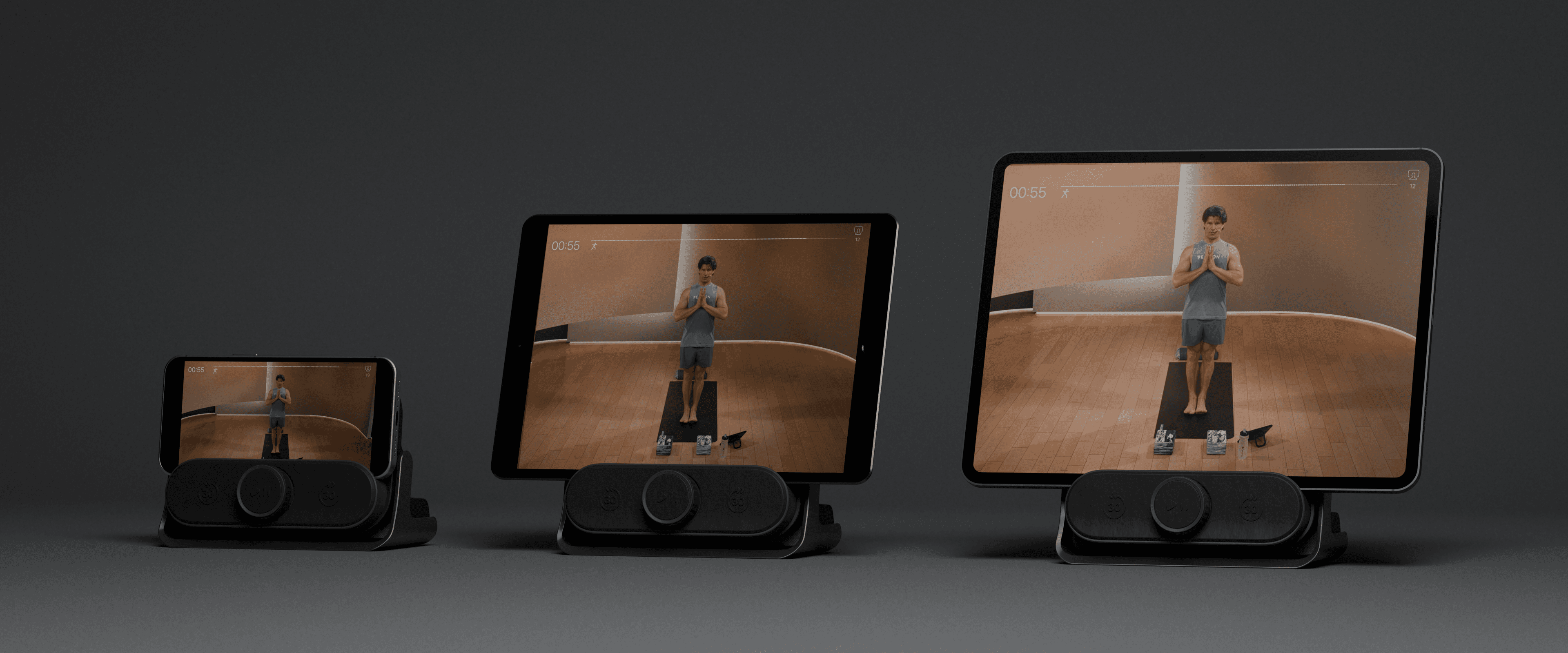
Peloton Wellness Coach
A hands-free stand for floor-based practice.
A device stand, Bluetooth speaker, and Peloton app integration in one object. Built for yoga, stretching, and low-intensity training so the setup never interrupts the session.
Duration
4 weeks
Industrial Designer
Software
SolidWorks, Rhino, Keyshot, Illustrator
Context
Peloton brand brief / Solo
School Project
Industrial Design
Interaction Design
User Research
Context
As the population ages, the exercises that sustain people change.
Yoga, stretching, and low-intensity training serve as entry points for people who haven't maintained fitness throughout their lives. The routines are accessible. Getting started is not.

Most people turn to YouTube. The experience falls apart before the session begins.
Thousands of tutorials exist with no trust filter for first-time users. Finding an instructor worth following takes multiple sessions, and most people don't get that far.
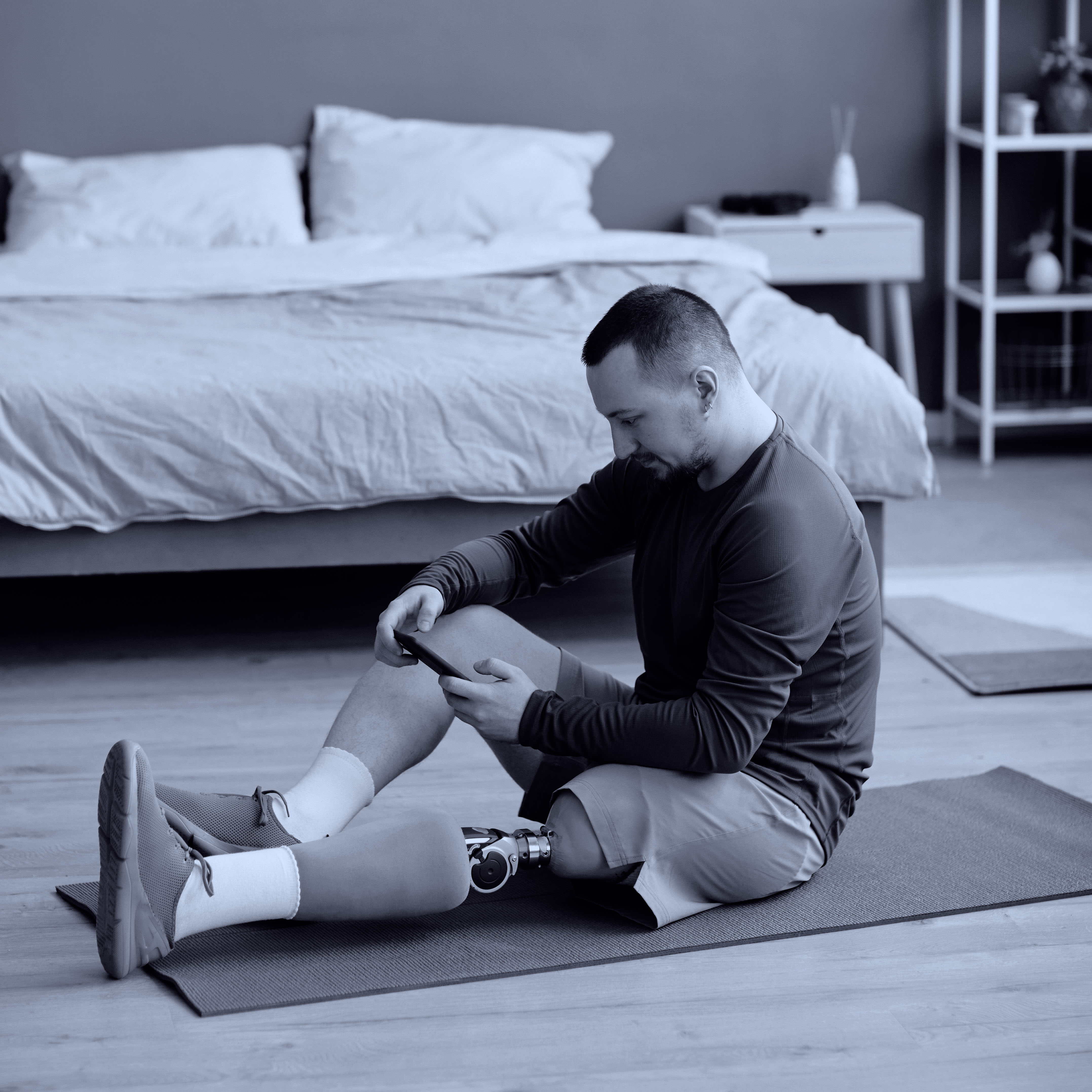
The phone slips. The audio cuts out. The setup fails enough times to stop the habit.
Problem
Two barriers compound: unreliable content and a setup that keeps breaking.
A phone balanced on a water bottle shifts the moment weight transfers to the floor. Sweaty fingers fumble at the timestamp. When the screen goes out of view, audio becomes the only guide. Earbuds fall out and a Bluetooth speaker is one more object to track mid-session.
Solution
A Peloton device stand, Bluetooth speaker, and app integration packaged as one object.
The Peloton Wellness Coach packages a phone stand, room-filling speaker, and tactile playback controls into a compact footprint. No touching the phone to adjust playback. No earbuds. No second screen.
Features
01
Rotating Playback Knob
Scrolls in 1-second increments. Click to pause or resume. No screen contact required.
02
30-Second Skip Buttons
Jump forward or back when a cue is missed. Tactile and usable without breaking position.
03
Friction Joint
Tilts from flat on the floor to fully upright. One angle for standing, another for seated.
04
Universal Device Lip
Holds phones and tablets of any size. Works with whatever device the user already owns.
05
Sonos Partnership Speaker
Room-filling audio for trainer voice and ambient music. Clear when the screen is out of view.
06
Wireless Charging Base
Built into the rear panel. Charges passively between sessions. Nothing to plug in.
The Peloton bike gets sold when people downsize. The Wellness Coach stays.
PROCESS
Research
Experienced practitioners had solved the setup. Beginners rebuilt it from scratch every session.
Research started with stretching and confirmed the same pattern across floor-based practices. People who stuck with it had a stable screen, reliable audio, and a trusted routine. People who quit were still solving the setup problem on session three.
Ideation
Early ideation explored stand geometry, control layout, and speaker integration across several distinct form directions.
Physical Prototyping
Physical testing confirmed which interactions mattered mid-session.
1:1 scale models tested knob placement, joint resistance, and lip geometry across device sizes. The knob position moved twice. Users naturally reached lower and more centered than the first iteration assumed.
Reflection
What I'd do differently.
Three things stood out after finishing this project: one about timing, one about research method, and one about what was actually being tested.
01
Bring physical interaction research into the first round
Prototyping earlier would have surfaced the knob placement issue in round one, not round three.
02
Observe use rather than ask about it
Interviews captured what people thought they wanted. Watching someone mid-session captured what they actually needed.
03
Clarify whether you're testing the object or the habit
The Wellness Coach only succeeds if it supports a routine that forms and sticks. Testing the object in isolation misses half the picture.
Luke Shen / Carnegie Mellon University / Industrial Design