Futureproof Electric Kettle
An electric kettle that reduces e-waste by inviting users to repair
Rather than hiding its technical systems, the Futureproof Electric Kettle makes maintenance and repair legible, safe, and engaging, reframing repair from a moment of concern into an act of care.
CAD
DFM
User Research
Duration: 7 Weeks
Role: Sole Designer
Tools: Solidworks, Rhino, Keyshot, Blender
Problem
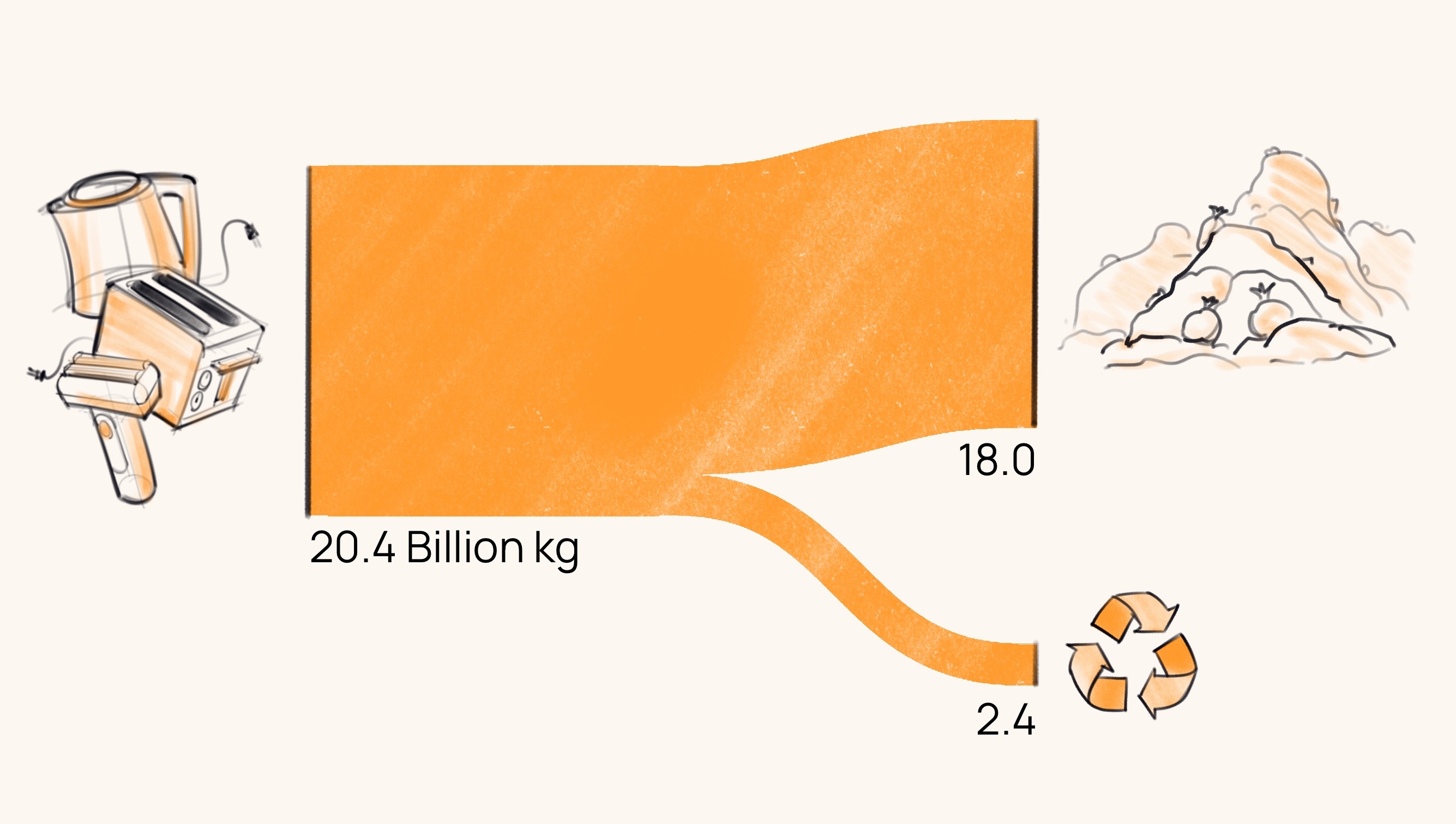
20.4 billion kg of small electrical appliances are thrown away yearly.
Only 12% gets recycled.
When an appliance breaks, users face an impossible choice:
Attempt to fix it, and break even further or, throw it away.
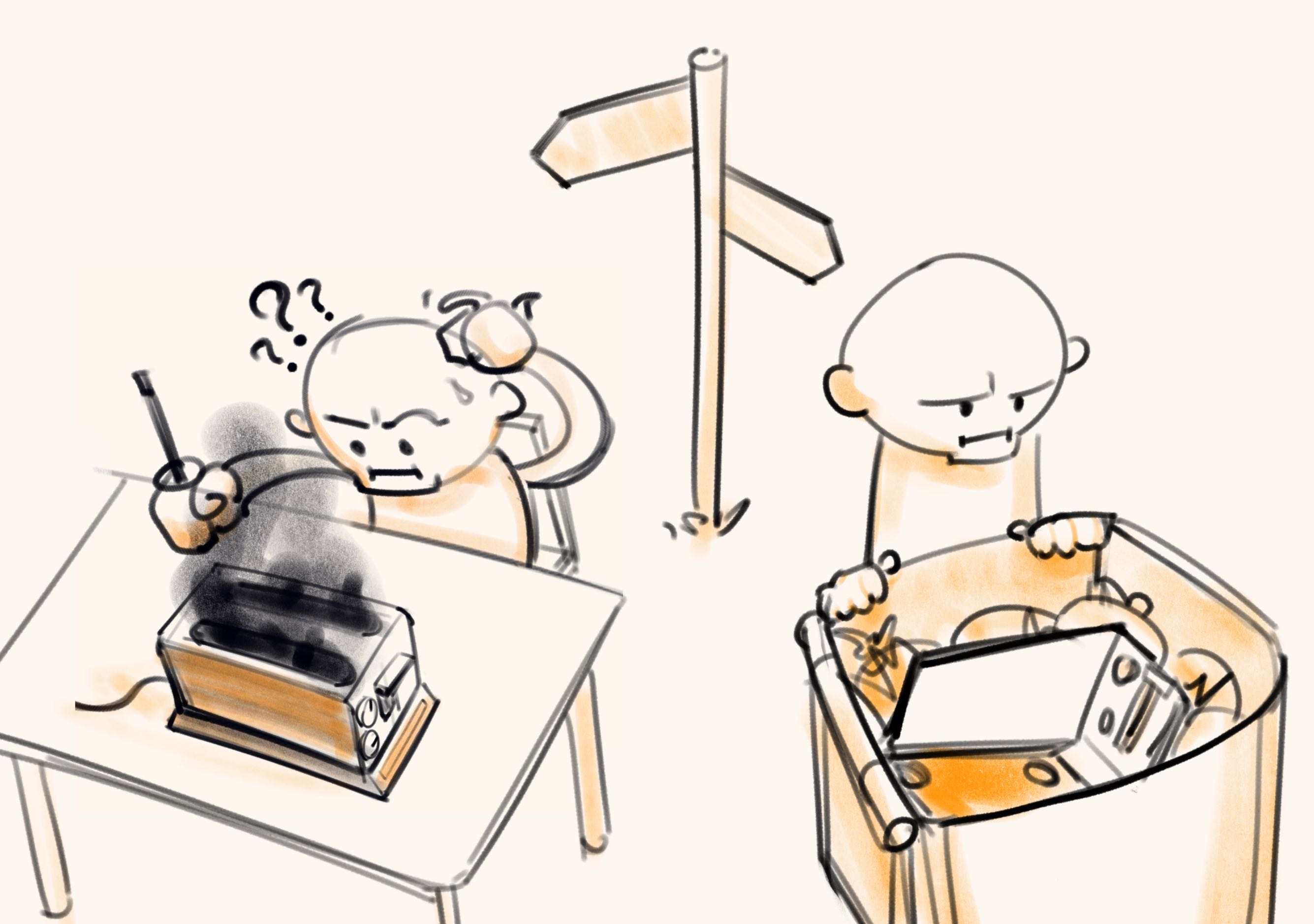
Most choose disposal,
not from lack of care or capability, but because repair has been deliberately designed out of the experience.
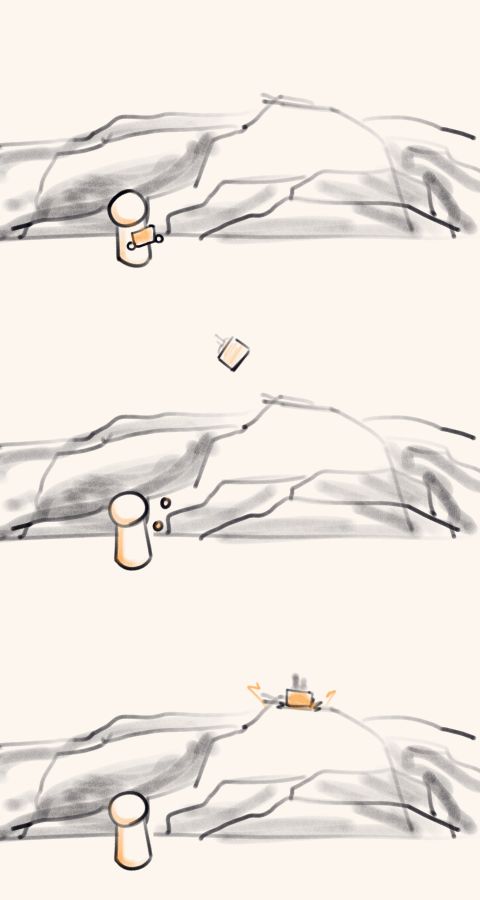
As everyday technologies grow more opaque, people are losing agency over the objects that shape their daily lives, while fixable appliances end up in landfills
Opportunity
To curtail the flow of e-waste into landfills,
redesigning for repair reduces harmful environmental impact and empowers daily user's repair competency.
Goal
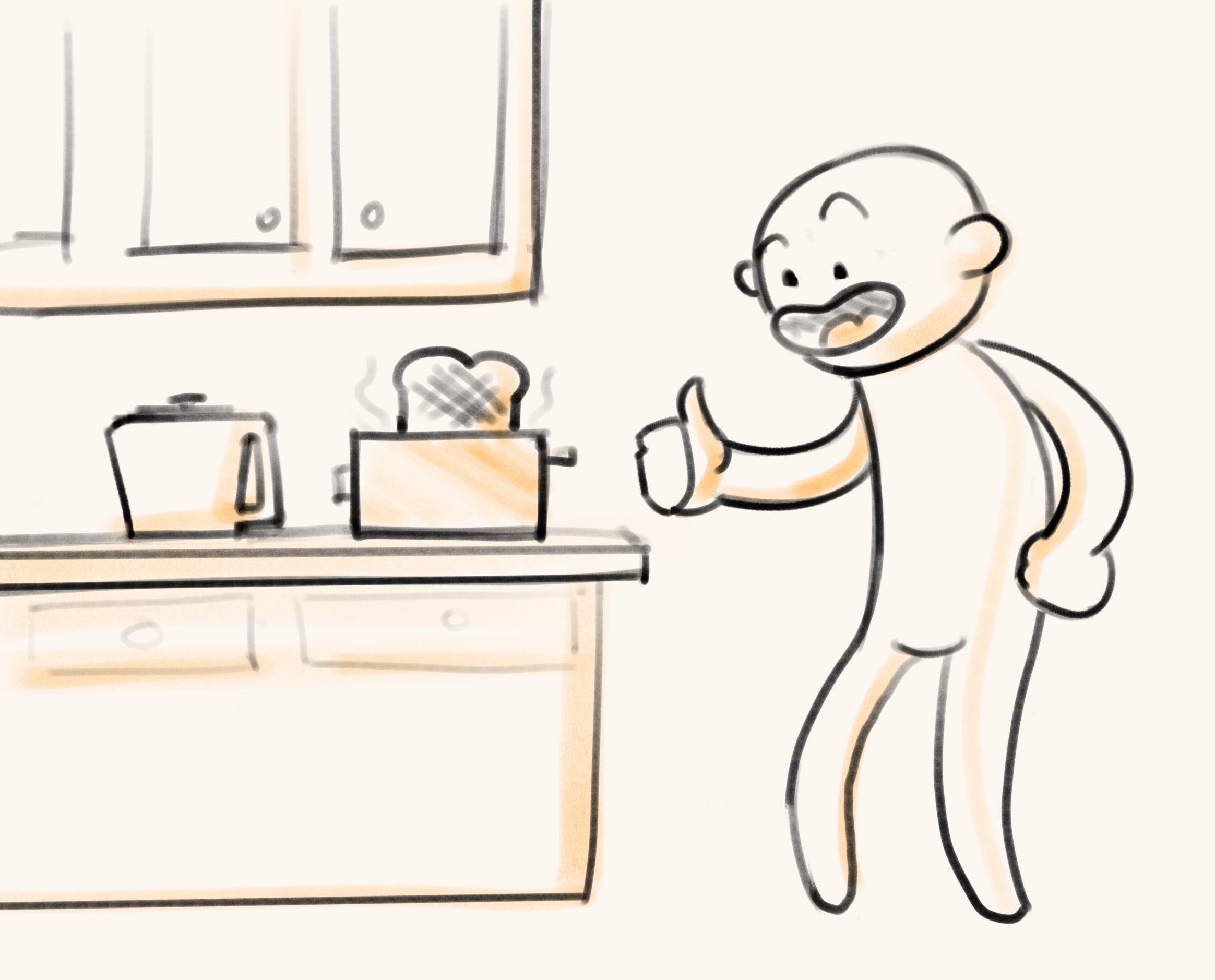
Design a small appliance that can be repaired, keeping it out of landfills and in homes.
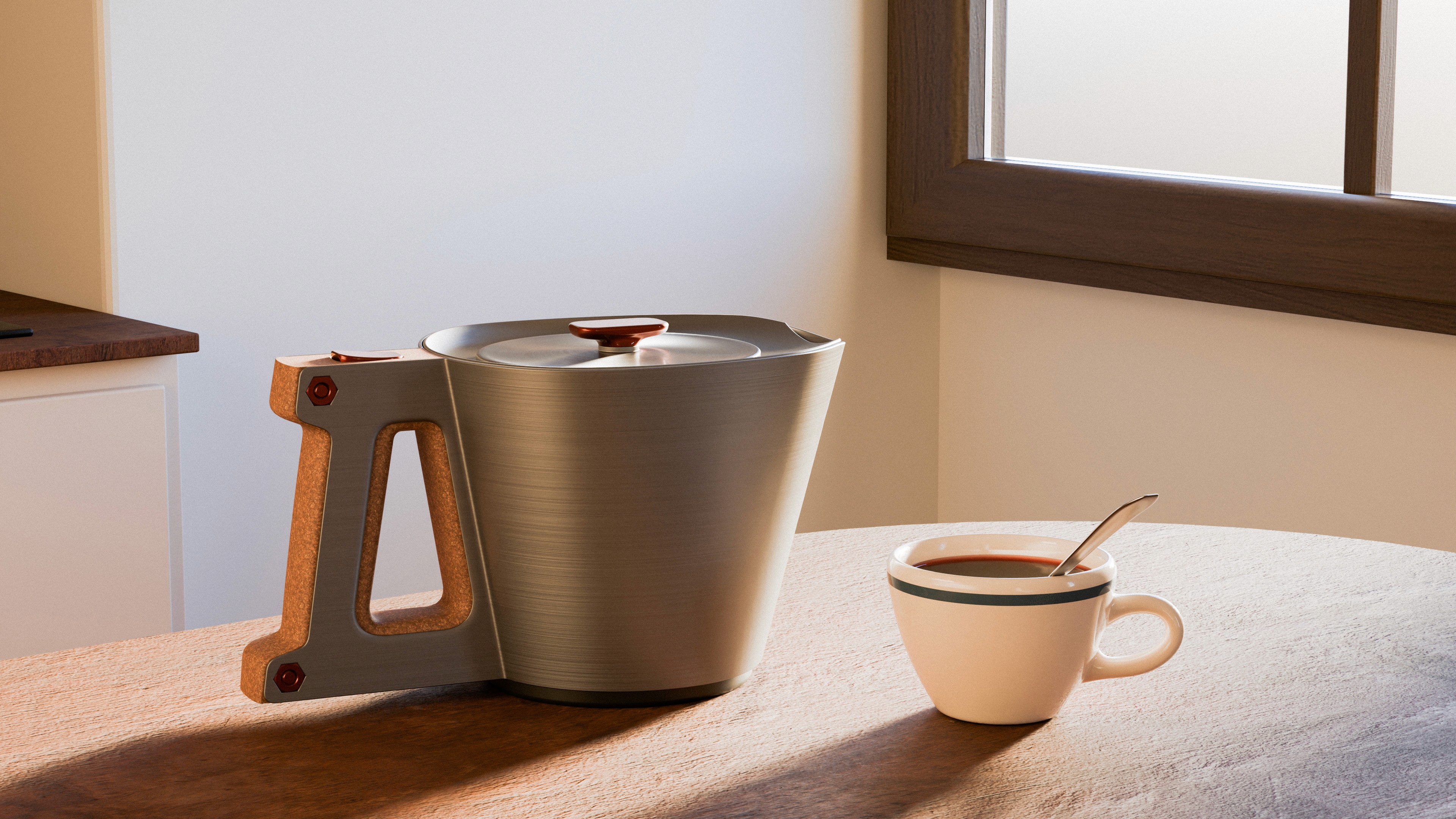
Built for disassembly,
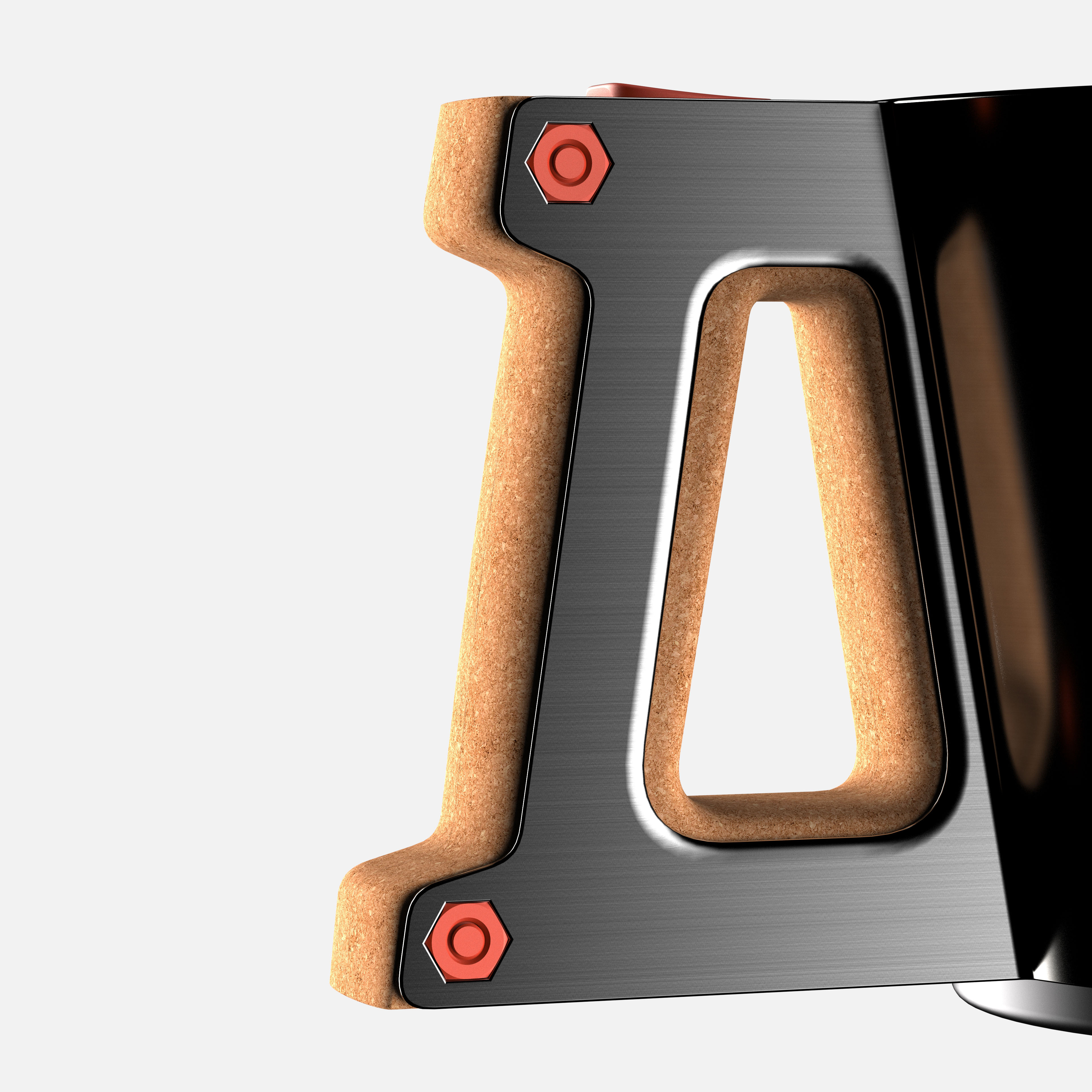
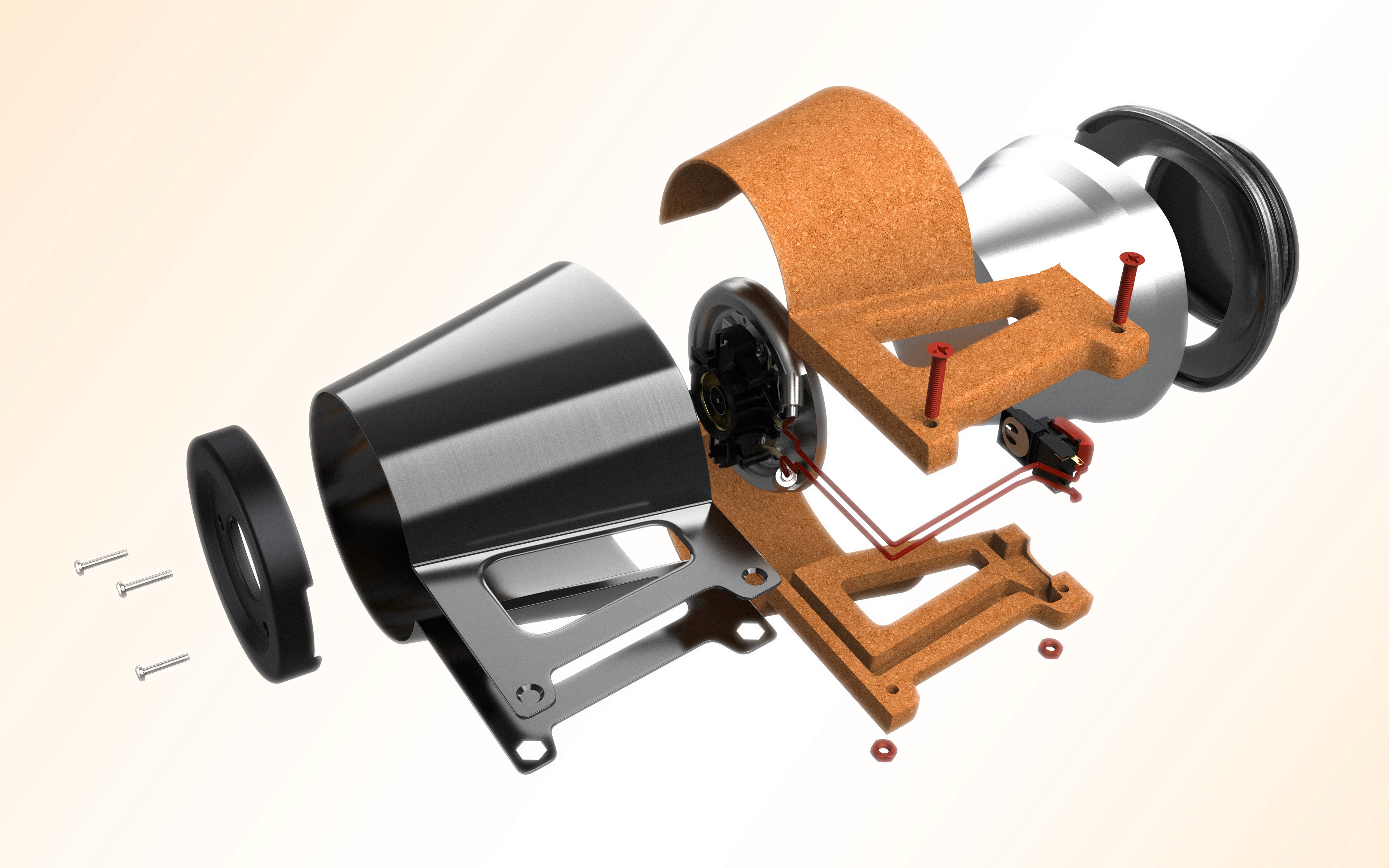
the Futureproof electric kettle approaches repair by ensuring users can access internal components without fear of permanent damage to the housing.
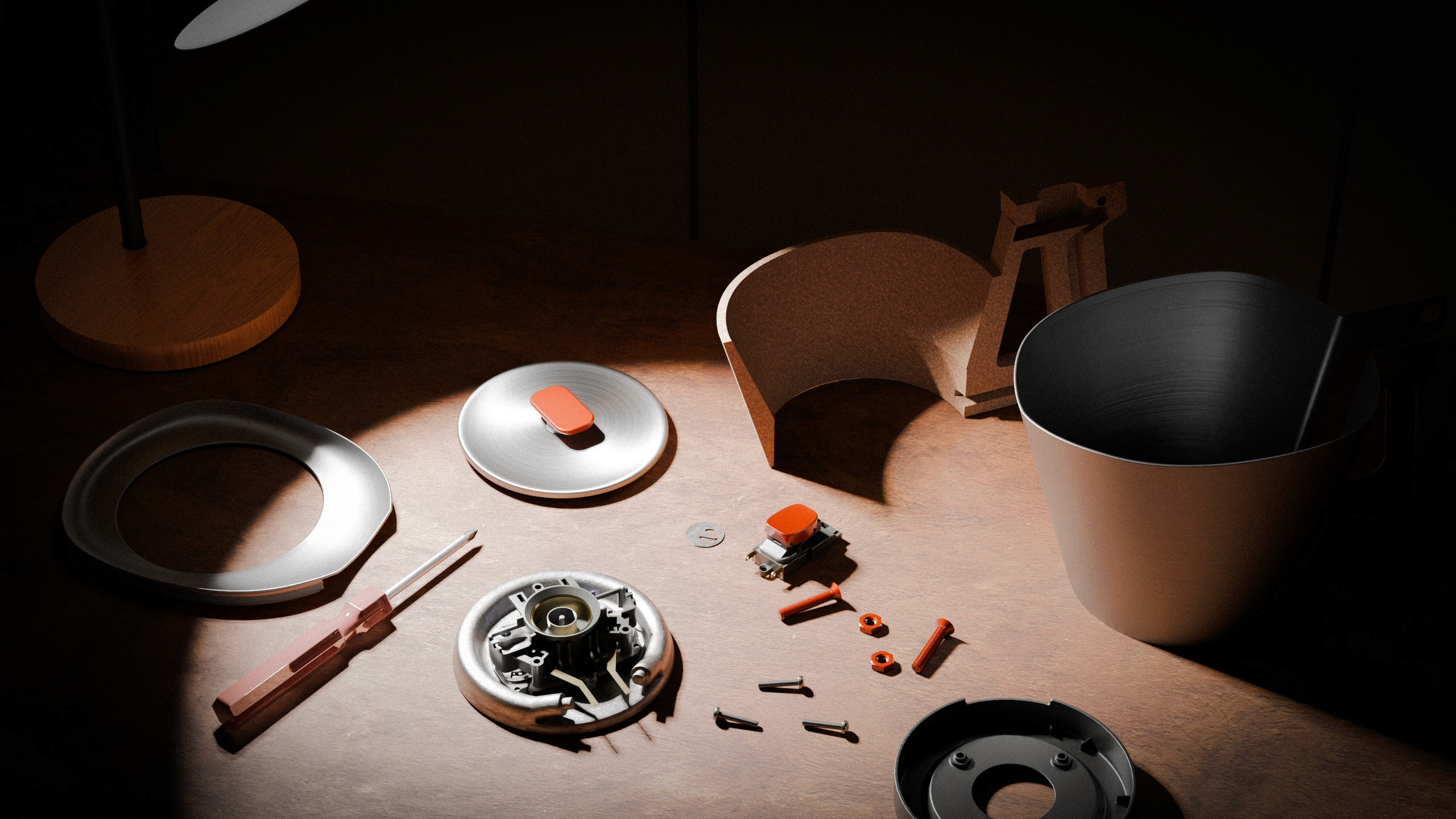
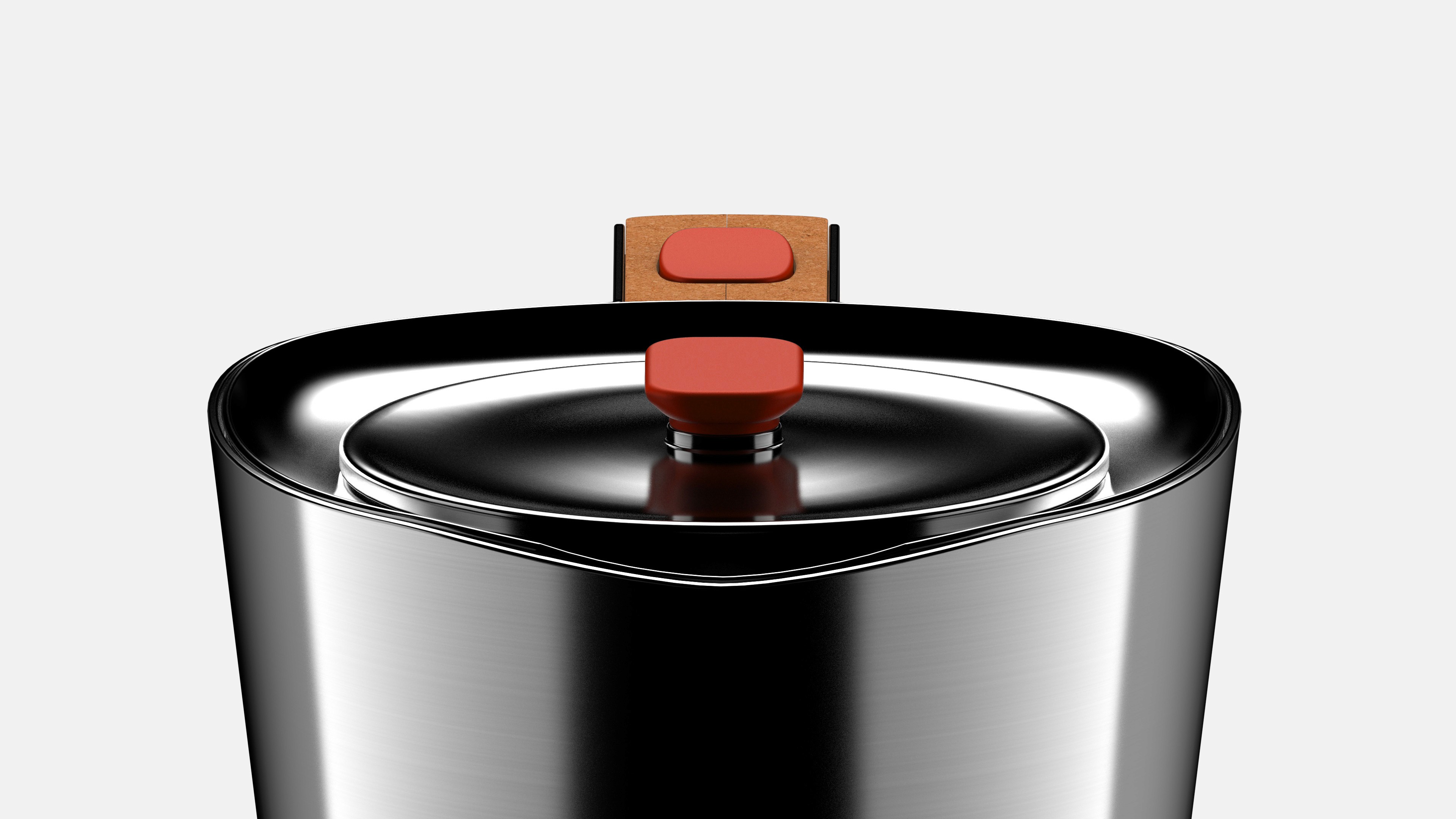
Colored parts and exposed screws imply interaction,
guiding users on where and what they can safely engage with.
The housing consists of simple geometry and single materials,
streamlining user reassembly, product manufacture and end of life recycling.
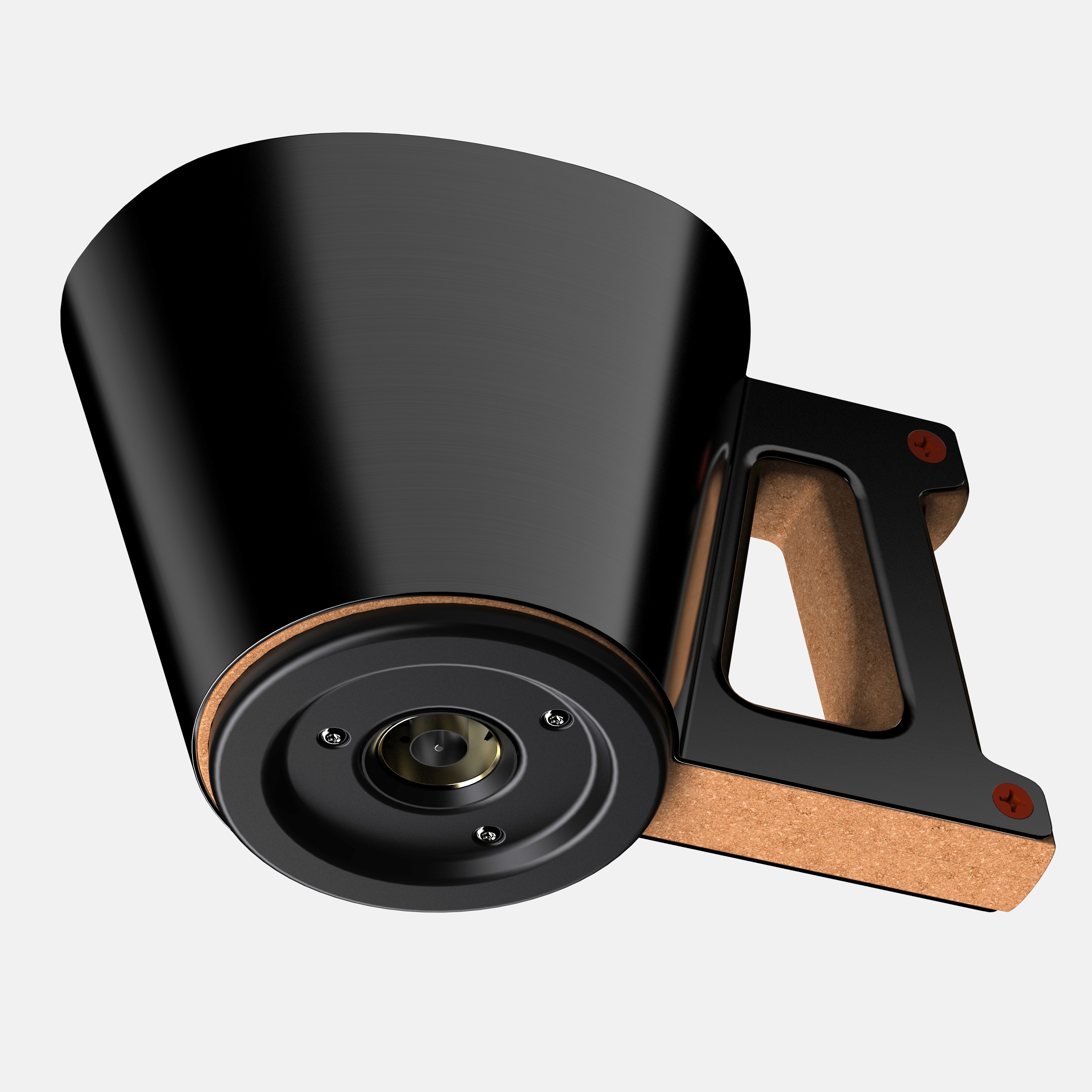
Molded cork serves as a versatile material throughout,
including structural support, thermal insulation and ergonomic grip.
Research
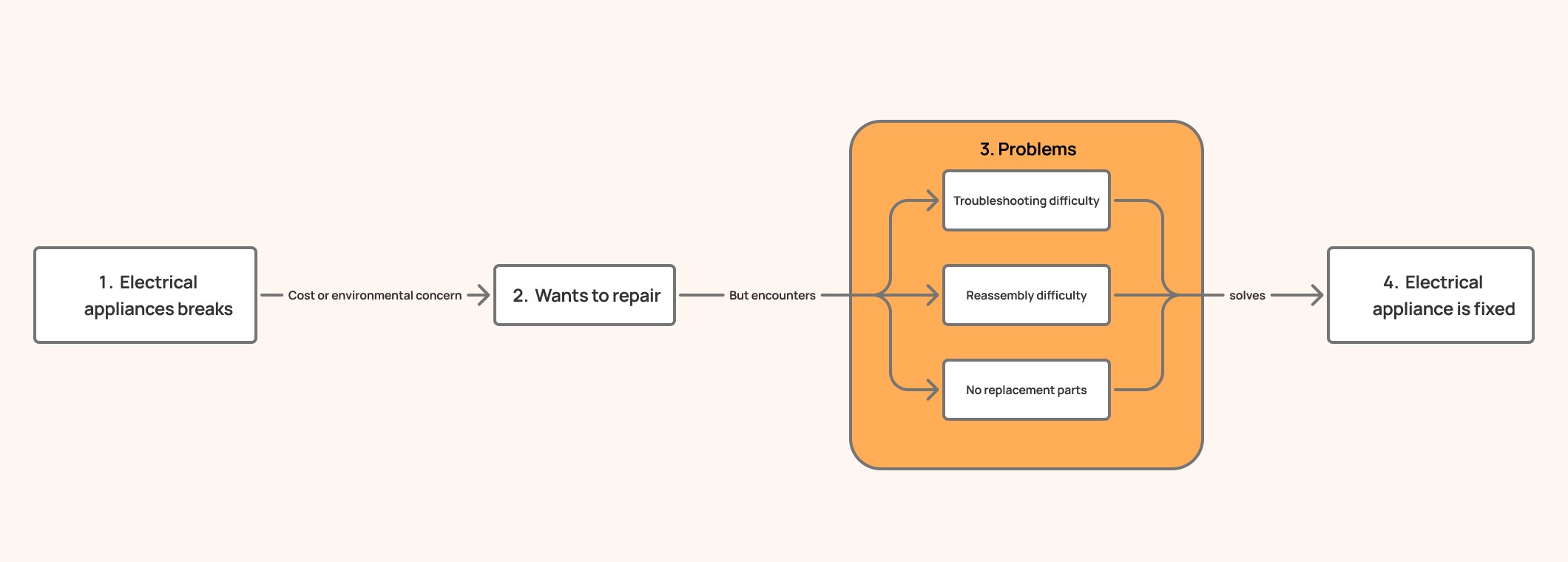
To understand why and how people repair,
I conducted in-person interviews and online surveys. They revealed motivations and setbacks on the act of repairing.
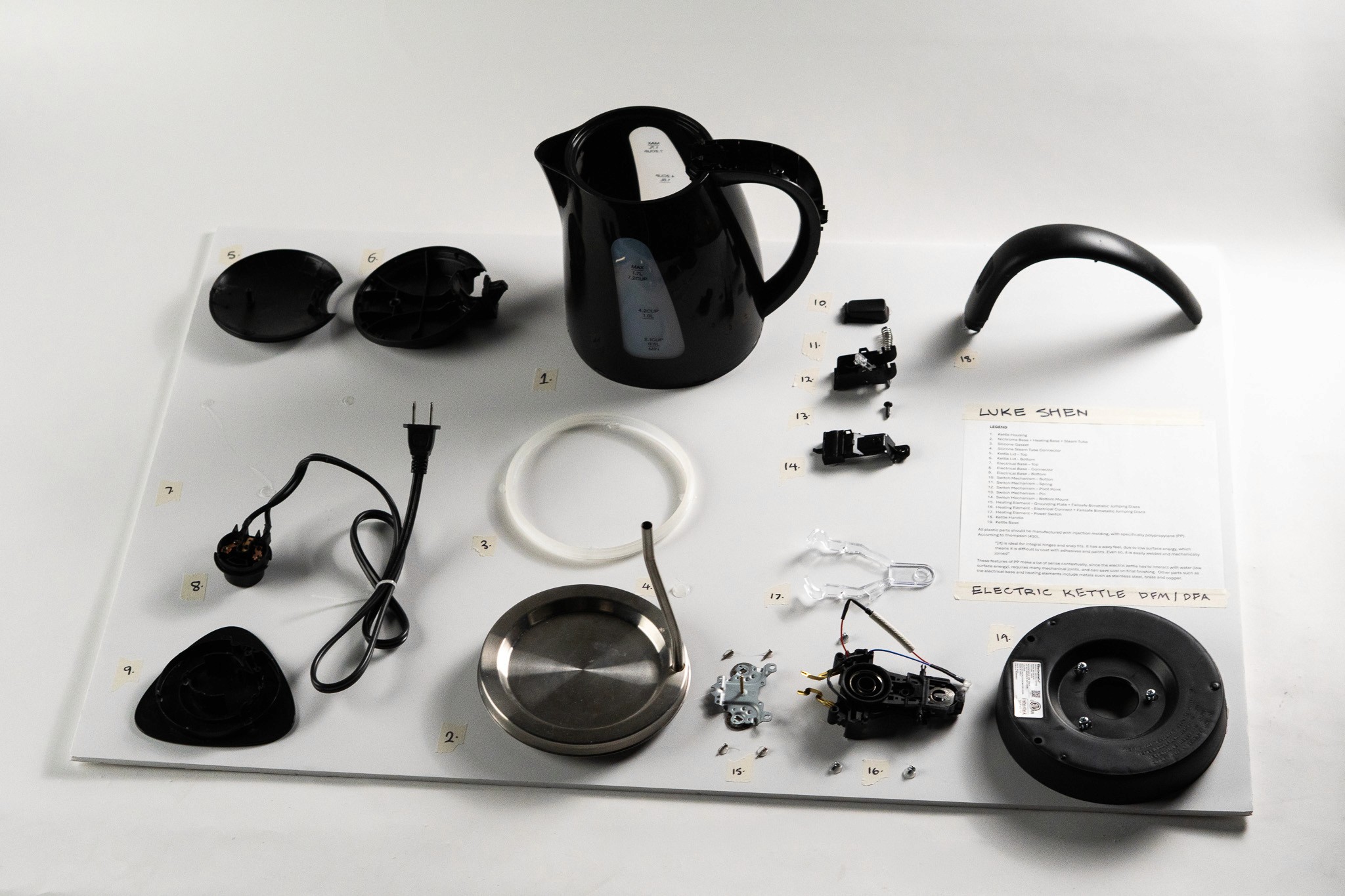
To understand how repair happens in context of disassembly and troubleshooting,
I took apart an electric kettle, and documented my findings, noting the key internal mechanisms and teardown pain points.
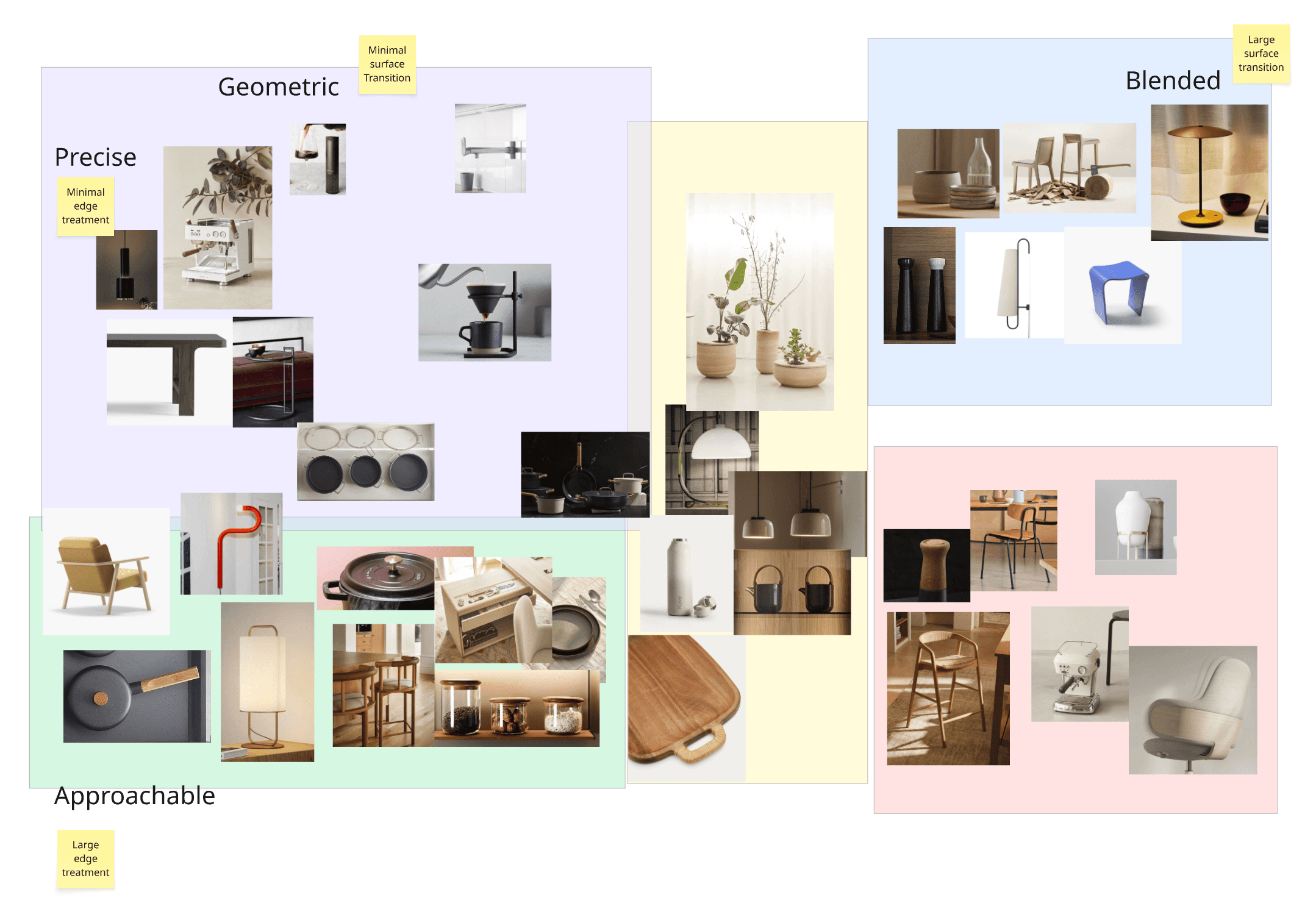
To help define the direction of this product,
I mapped the global market and found an existing segment: well-designed, essential feature kettles.
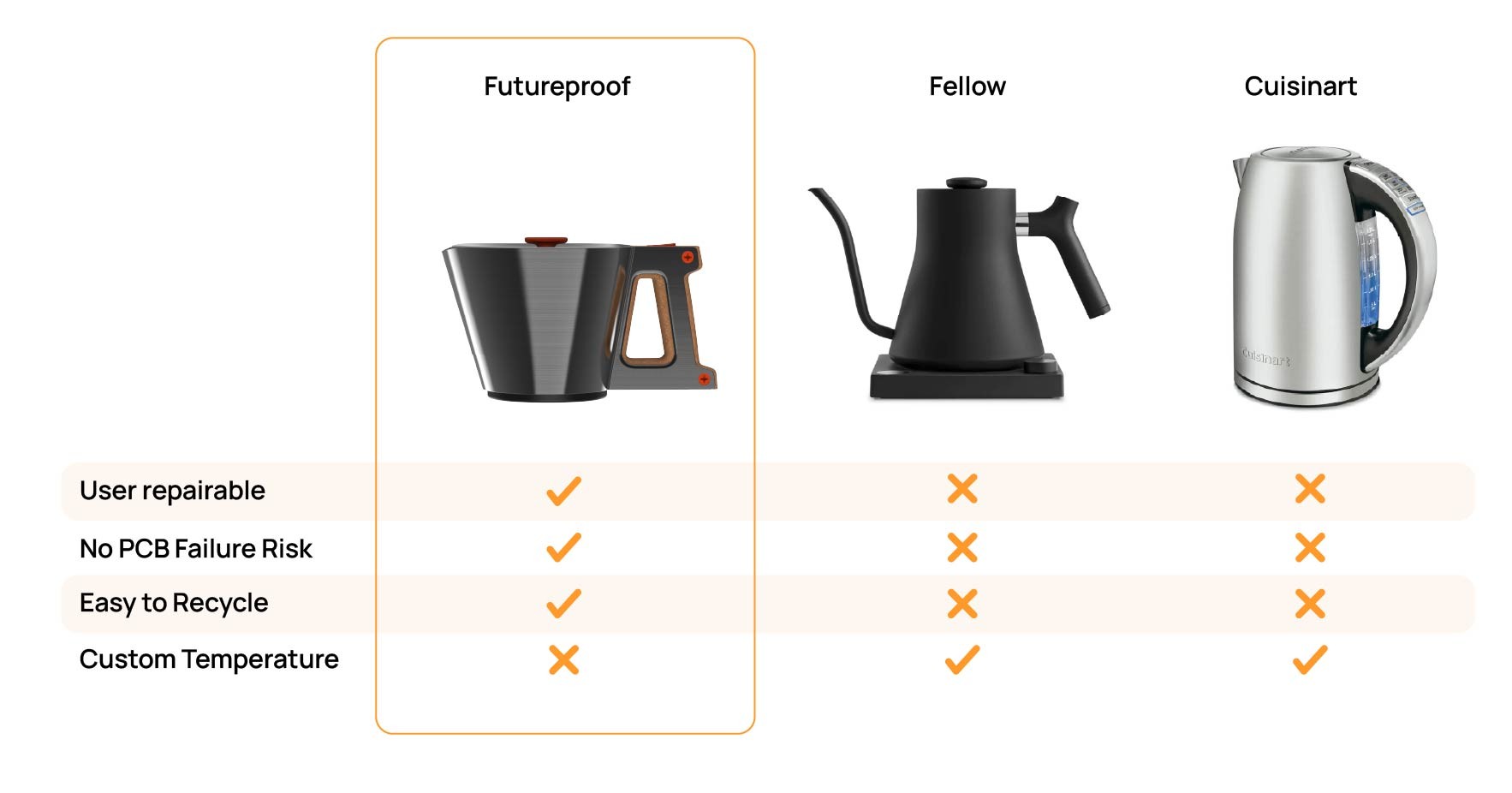
No kettle on the market prioritized repairability or lifecycle sustainability
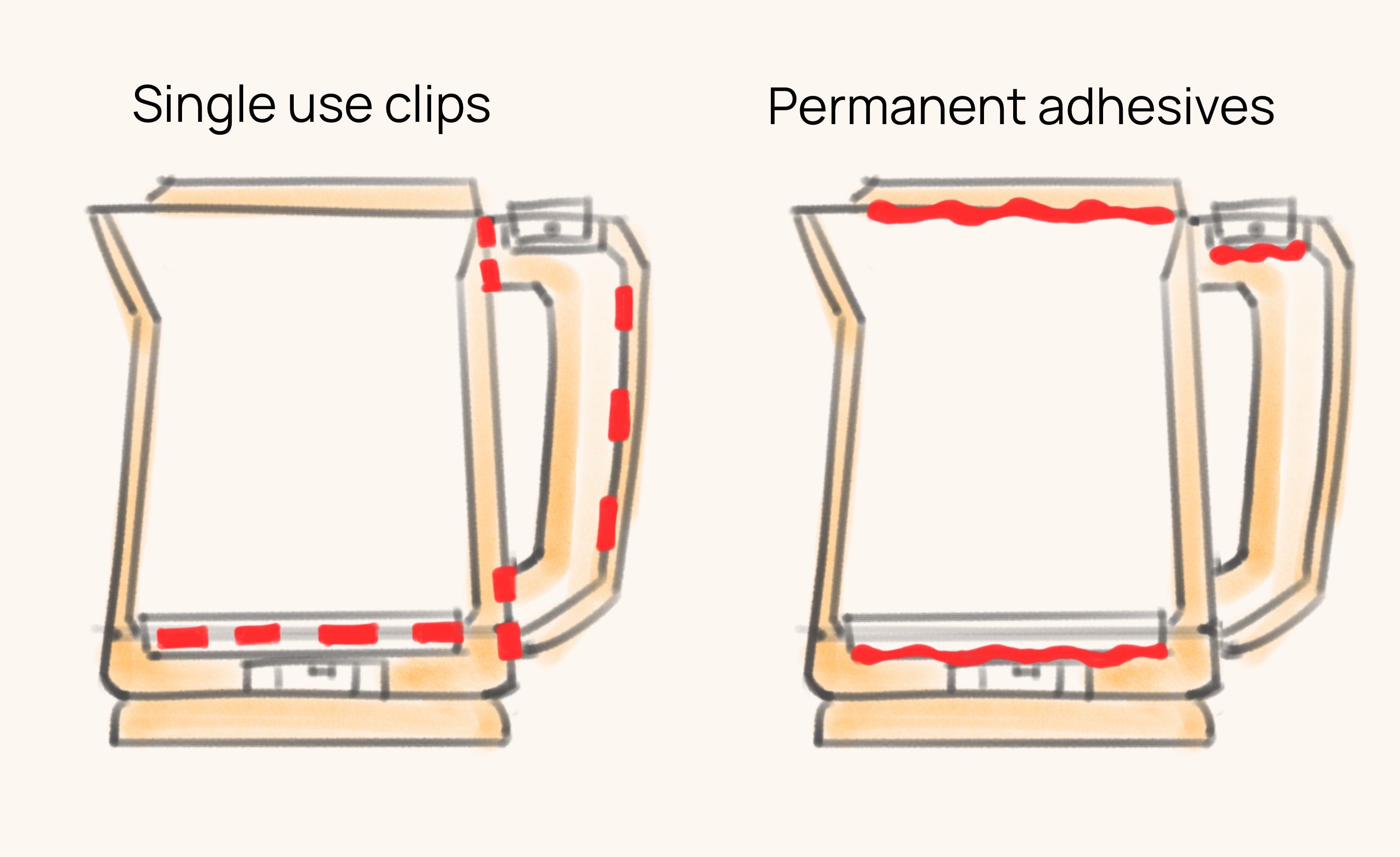
These products are mechanically simple enough to repair,
but the placement of single use clips and permanent adhesive make the disassembly of the product destructive or impossible.


Sketch Iterations
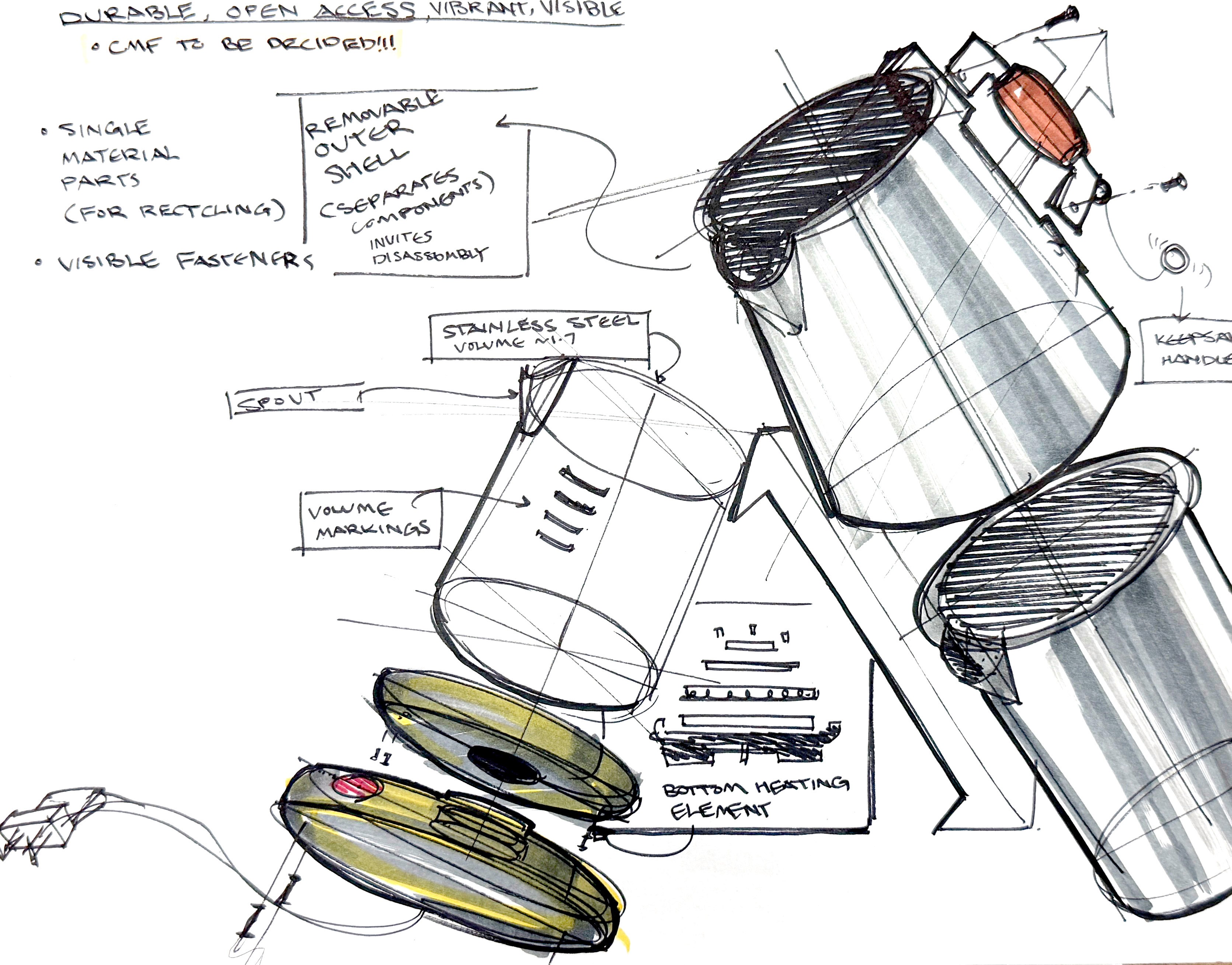
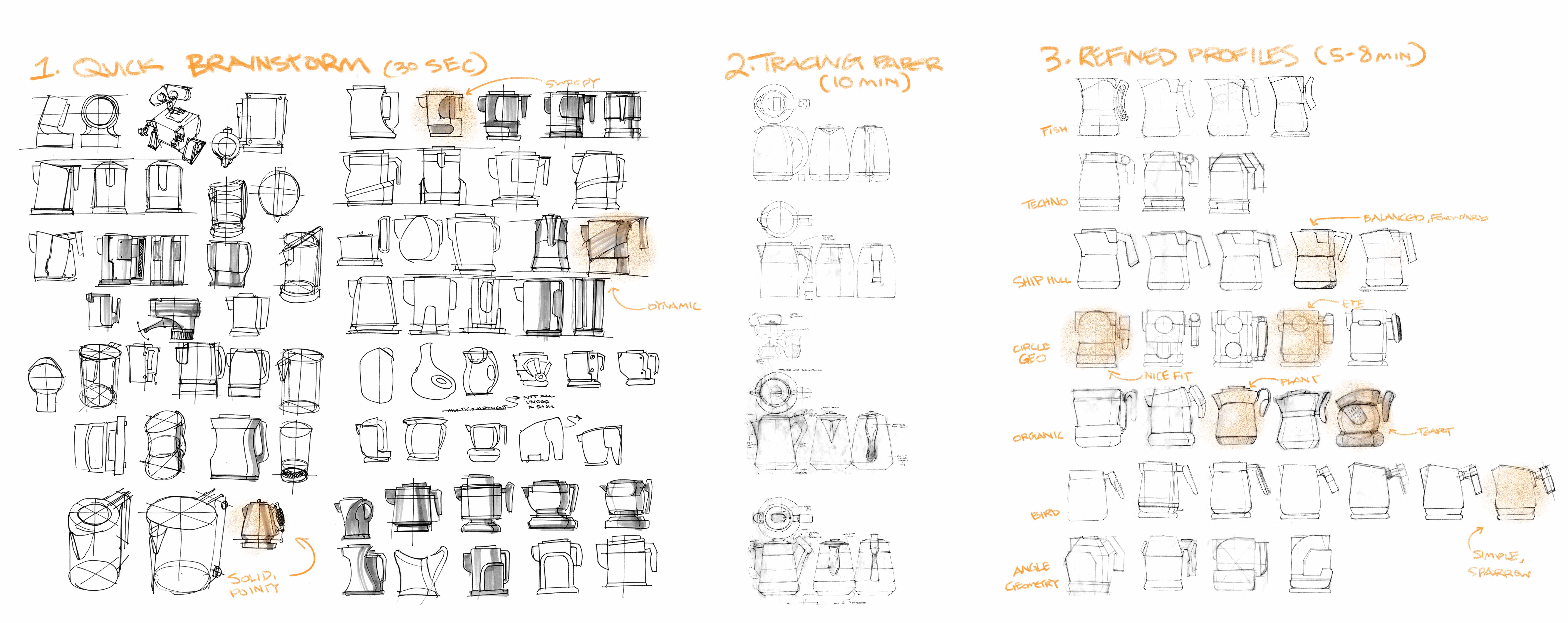
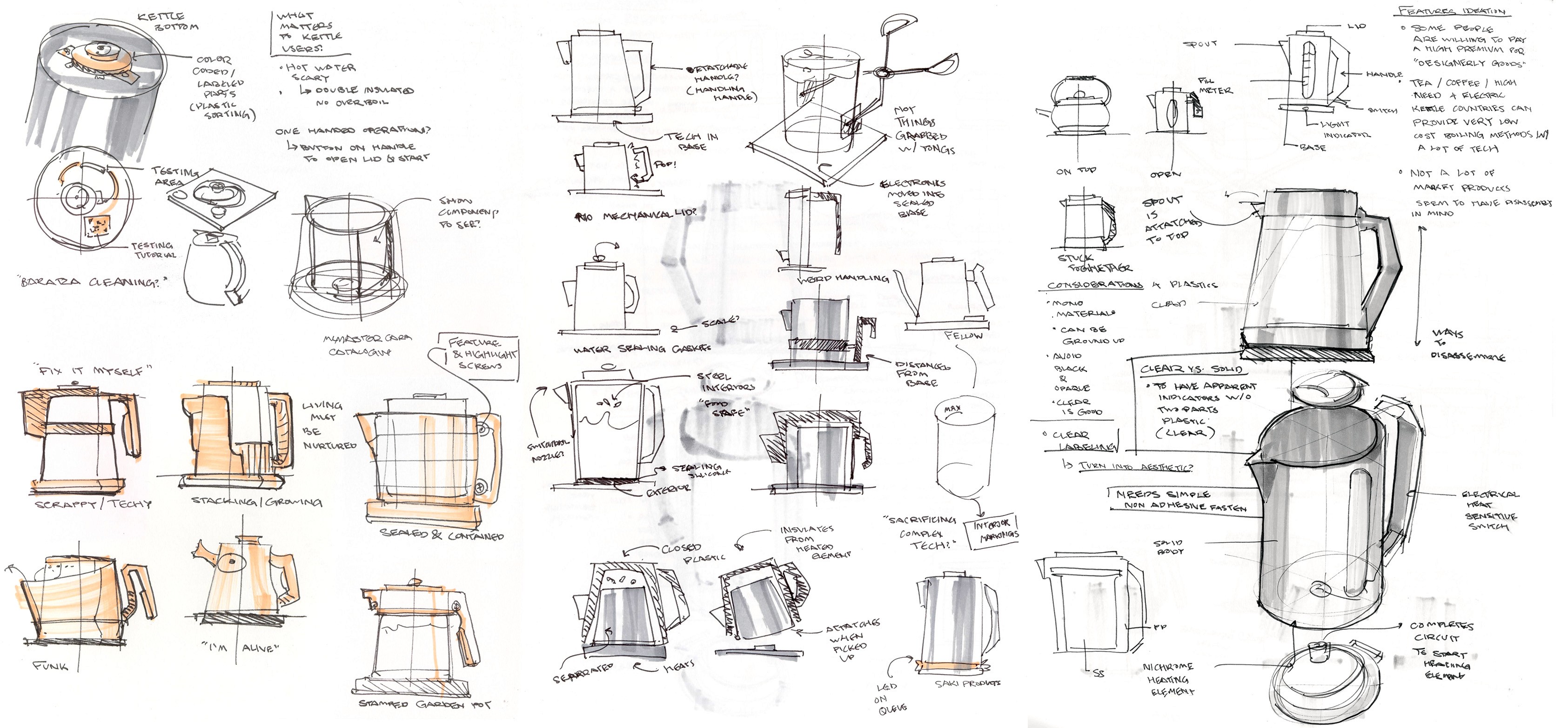
I sketched many iterations to explore form and interaction opportunities.
I initially constrained myself to the classical proportions of an electric kettle to promote realism. My final form broke away from that to take inspiration from traditional kettles.



Physical Prototyping
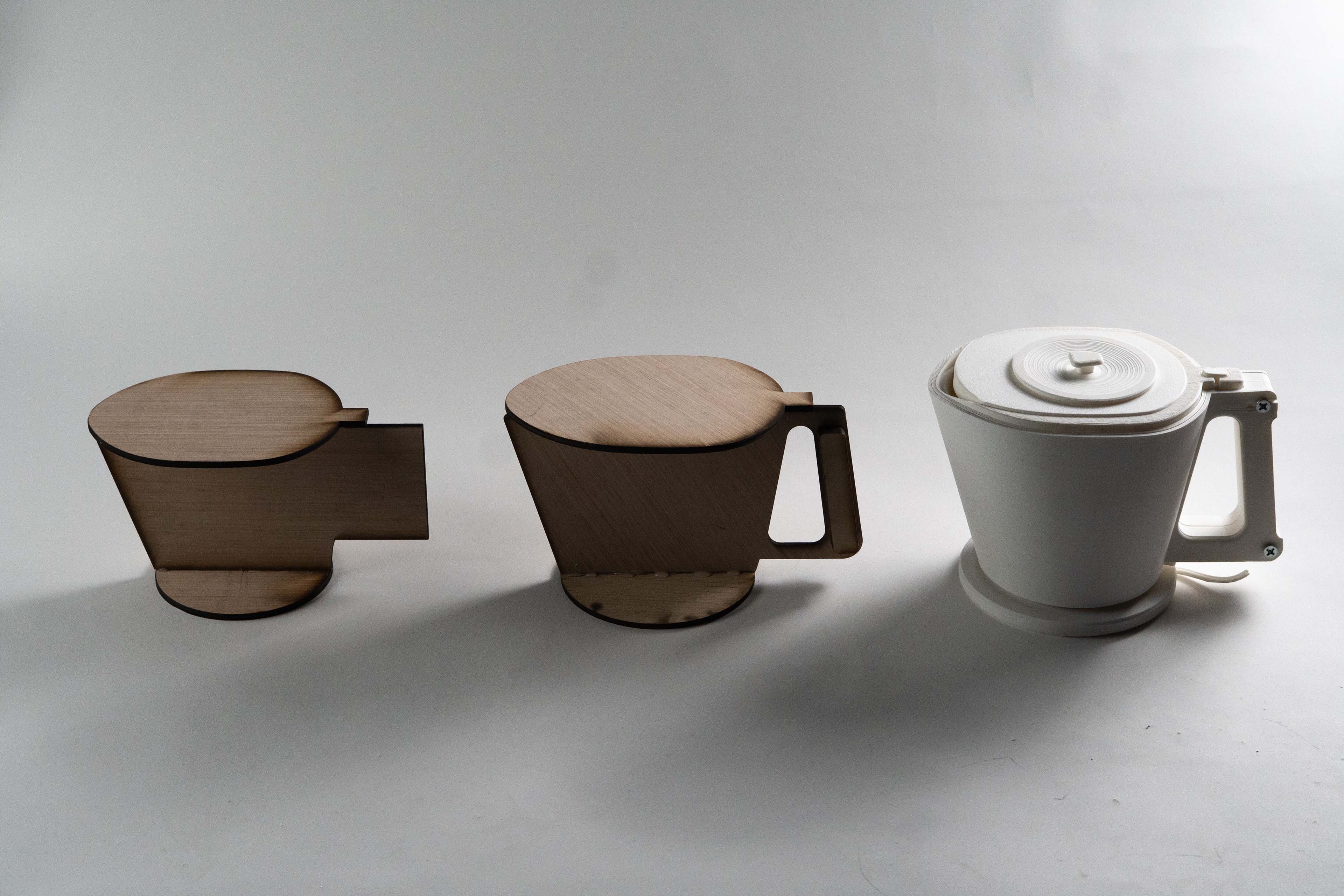
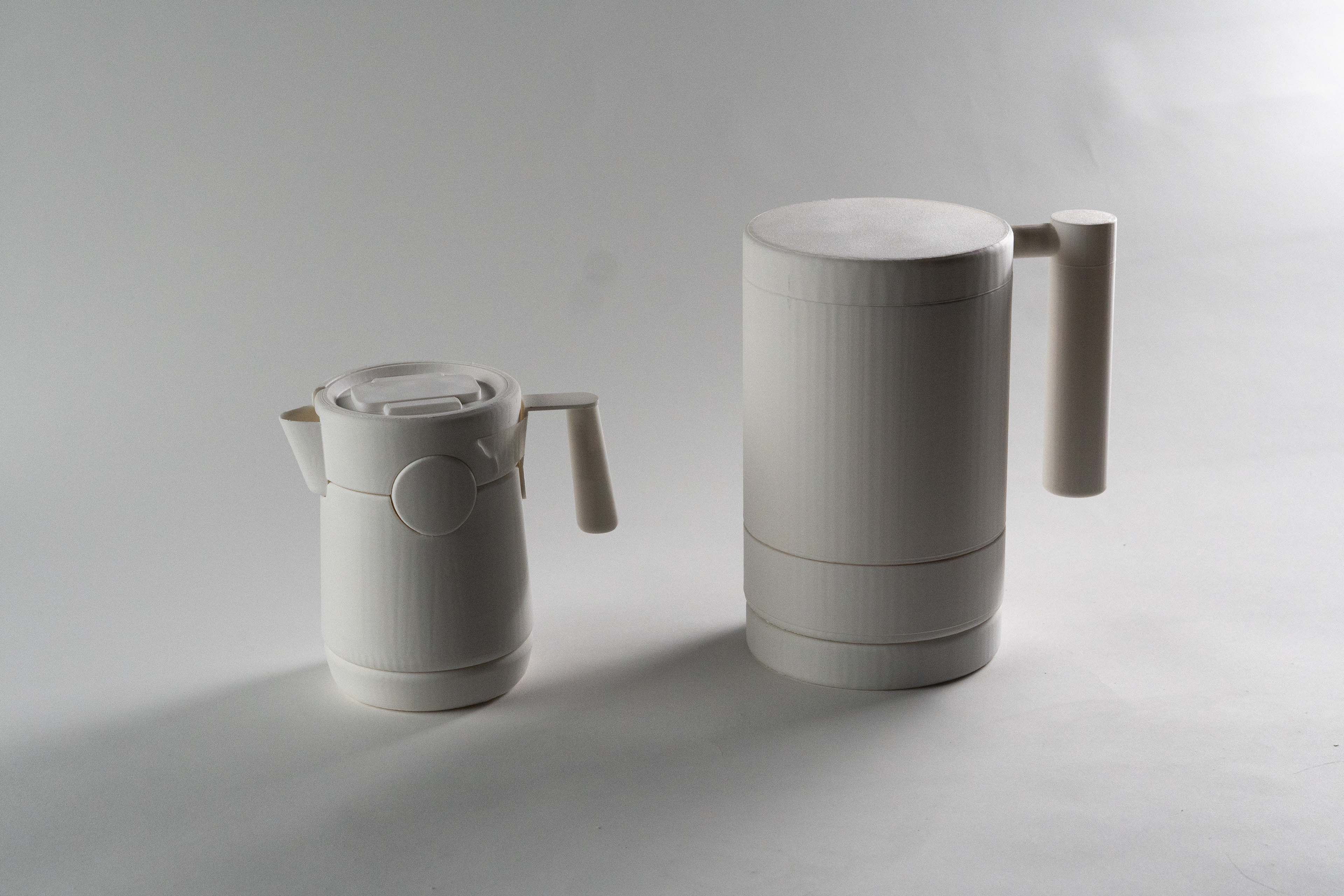
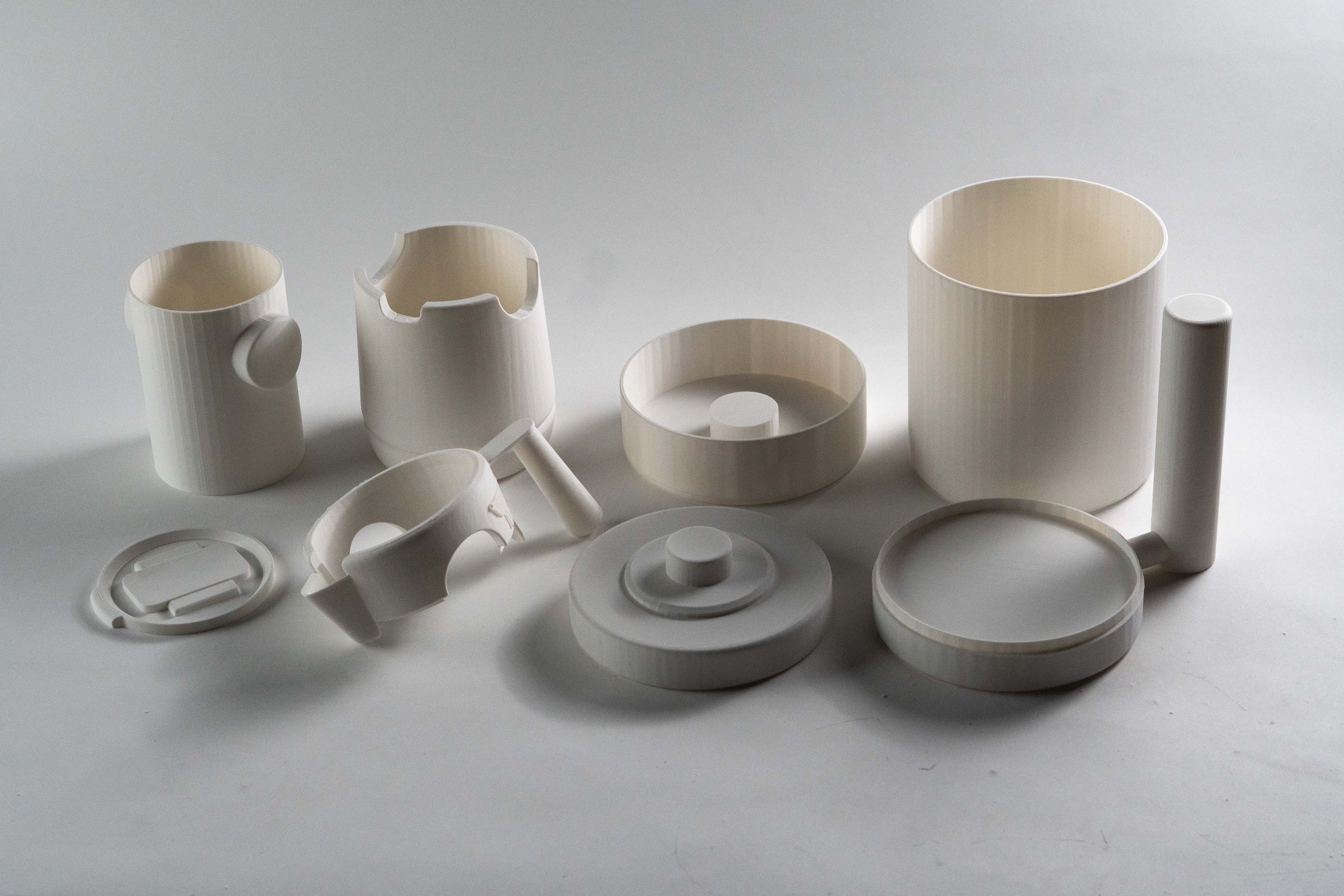
I verified my interactions through laser cut and 3D printed models,
to develop looks-like and works-like models. I wanted to better understand how the geometry of my form affected the handling.
Pouring Interaction
Reassembly Interaction
Scale and Handling Iterations
CAD Iterations
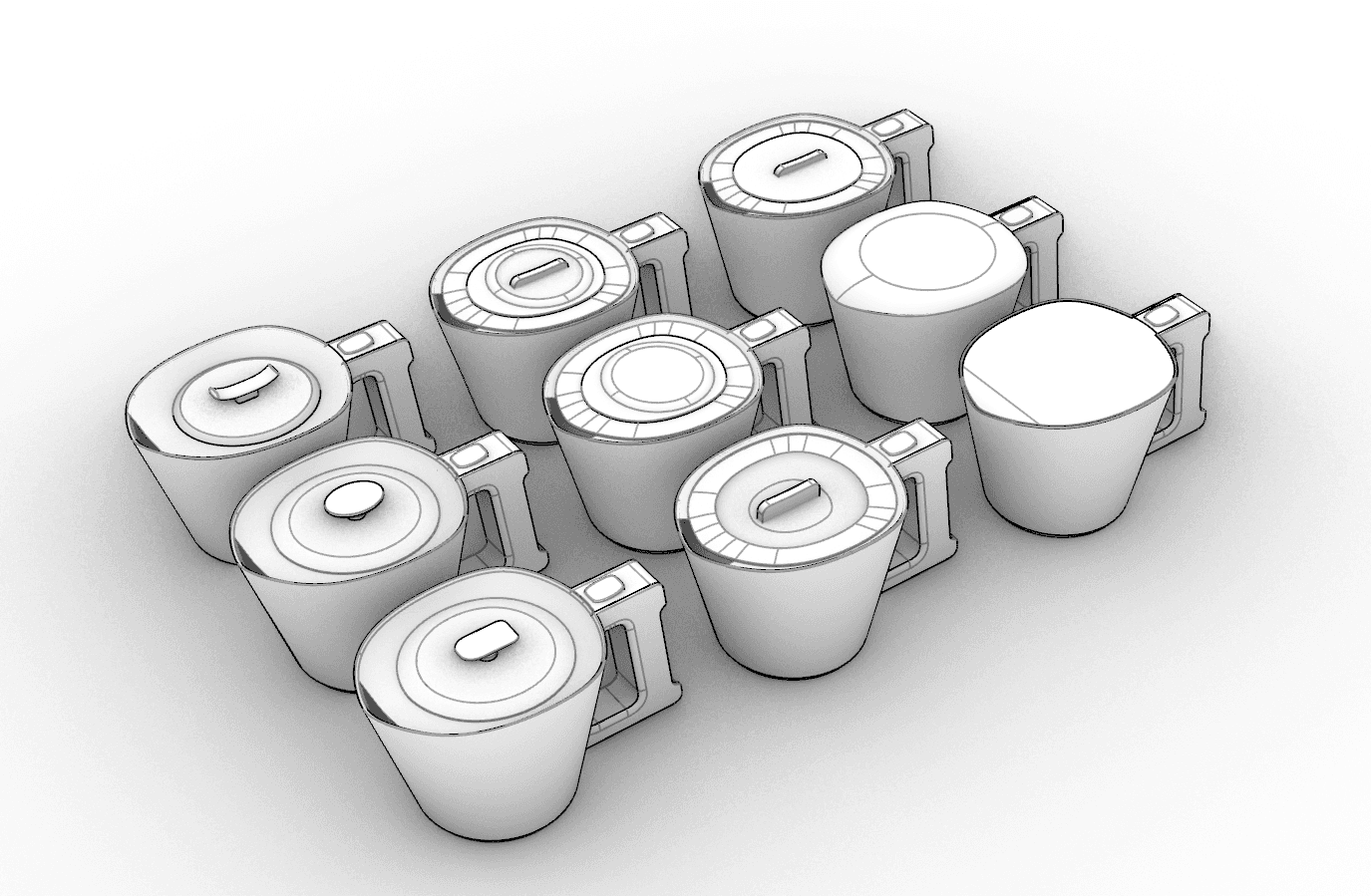
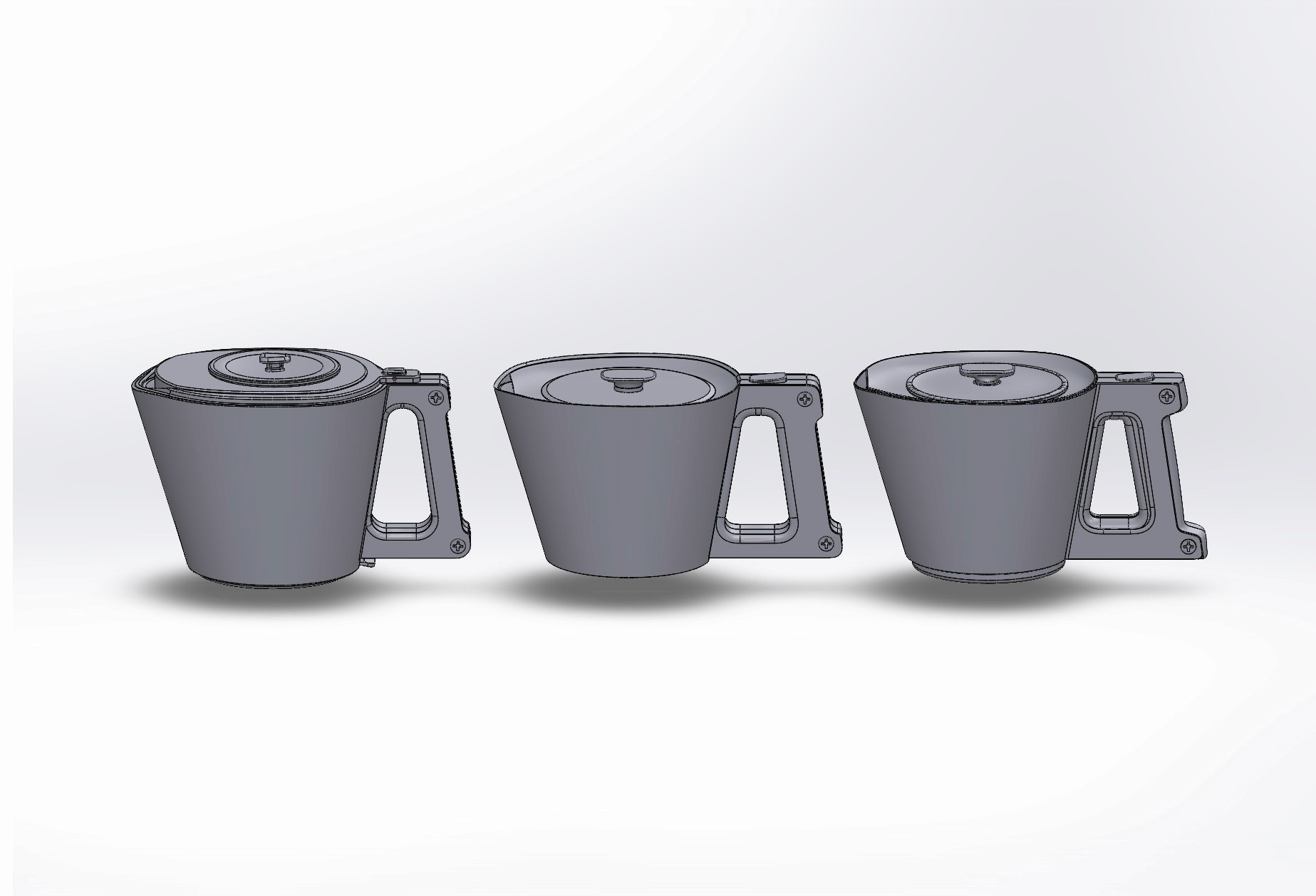
I refined the form with Solidworks and Rhino,
exploring different handles and lids to polish visual cohesion and surface fidelity.
Rhino Iterations
Solidworks Iterations
More to do
Iterate on opening interaction, creating greater confidence in reassembly process