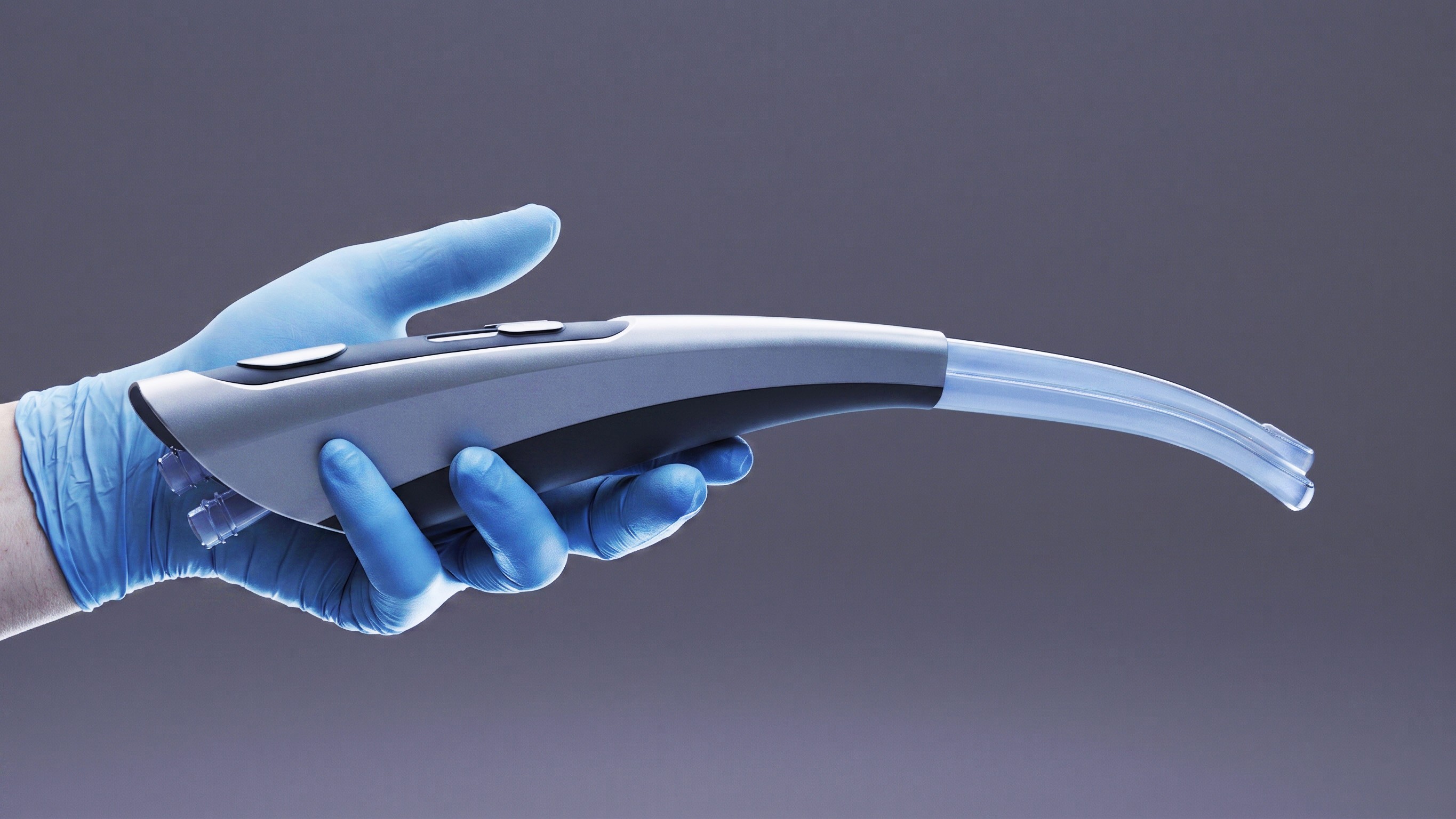
MIRIKAL Devices: LumiFlex
A four-function surgical instrument for orthopedic procedures.
A single tool combining suction, irrigation, retraction, and illumination. Built for shoulder and joint surgeries where instrument exchanges cost time and crowd the surgical field.
Duration
14 Weeks
Role
Industrial Designer
Software
SolidWorks, KeyShot, Blender, Vizcom
Context
Biomedical Engineering Capstone
School Project
Medical Device
Orthopedic Surgery
Hardware Design
Collaboration
Teamates
Mildred, Isha, Riya, Ash, Kim, Audrey
Context
Orthopedic surgeons work in narrow, bleeding spaces.
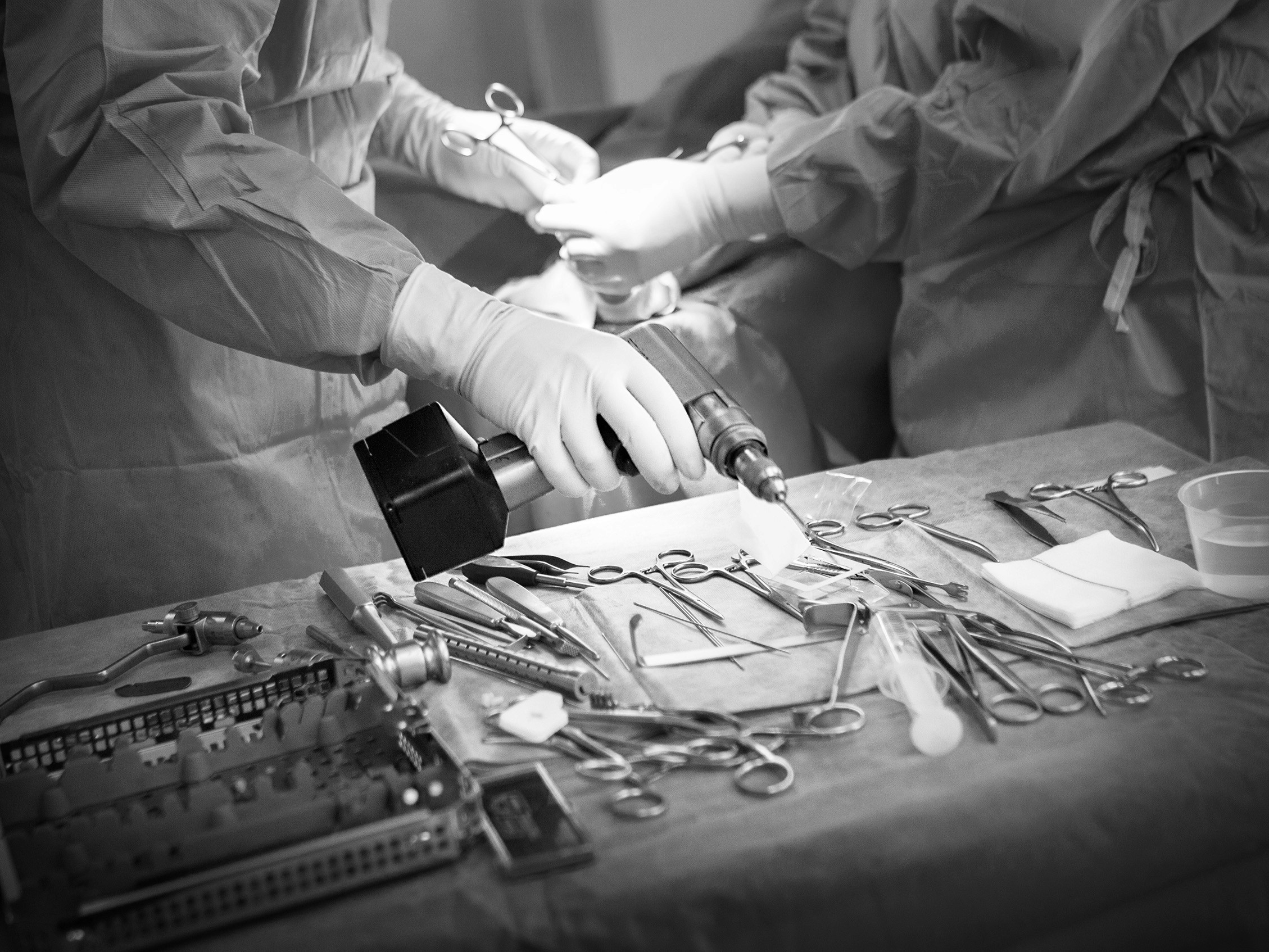
Visibility is critical and the field fills fast. In a joint replacement or shoulder repair, every extra instrument is a problem. The standard setup requires four separate tools, each one handed off, swapped out, and tracked. Over a long procedure, that overhead compounds.
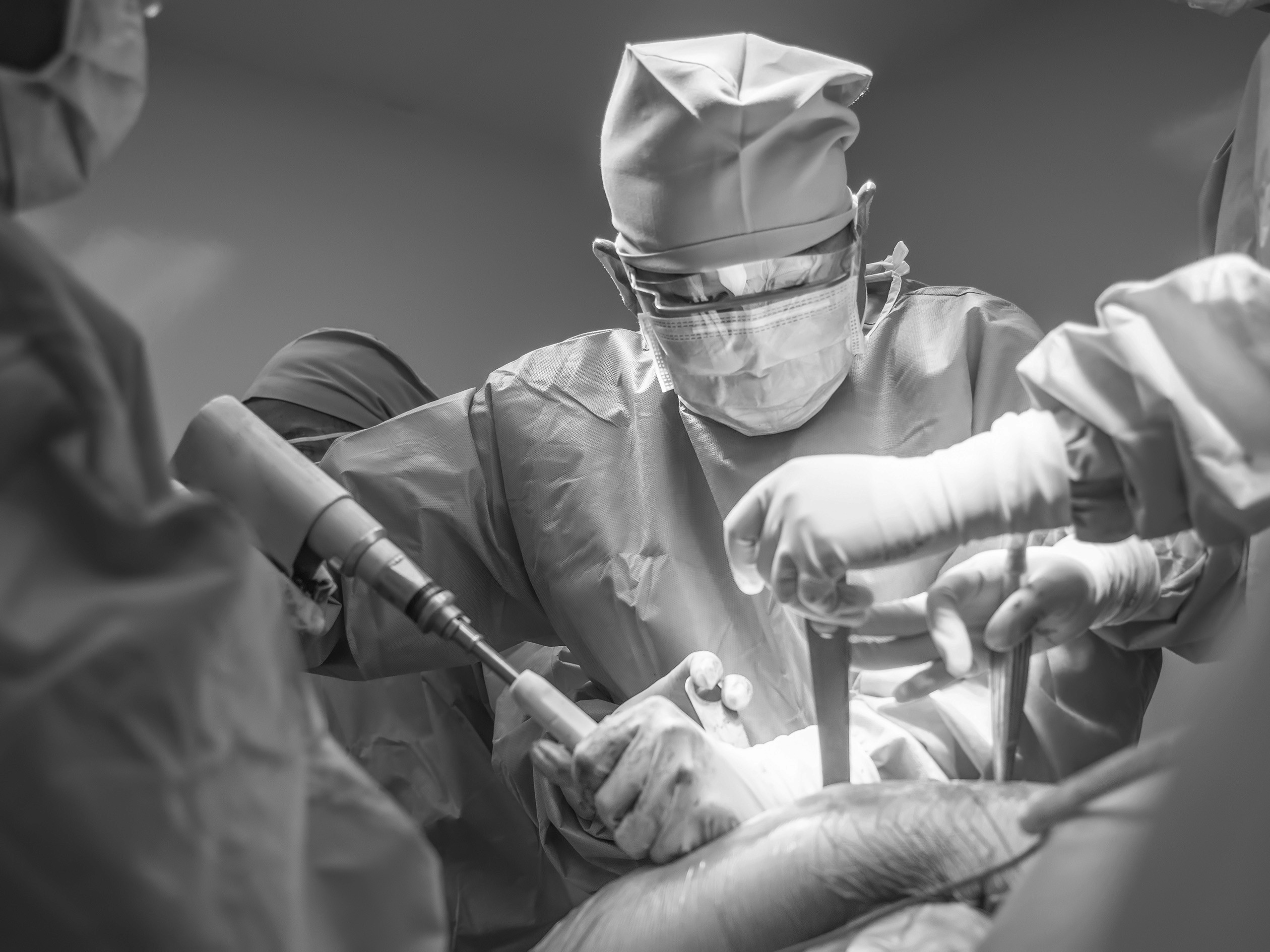
The instrument gets used in conditions most tools never see.
Shoulder orthopedic surgery means the device gets pushed against bone, held under pressure, and moved aggressively between uses. That physical reality shaped every form decision — handle geometry, button placement, material choice.
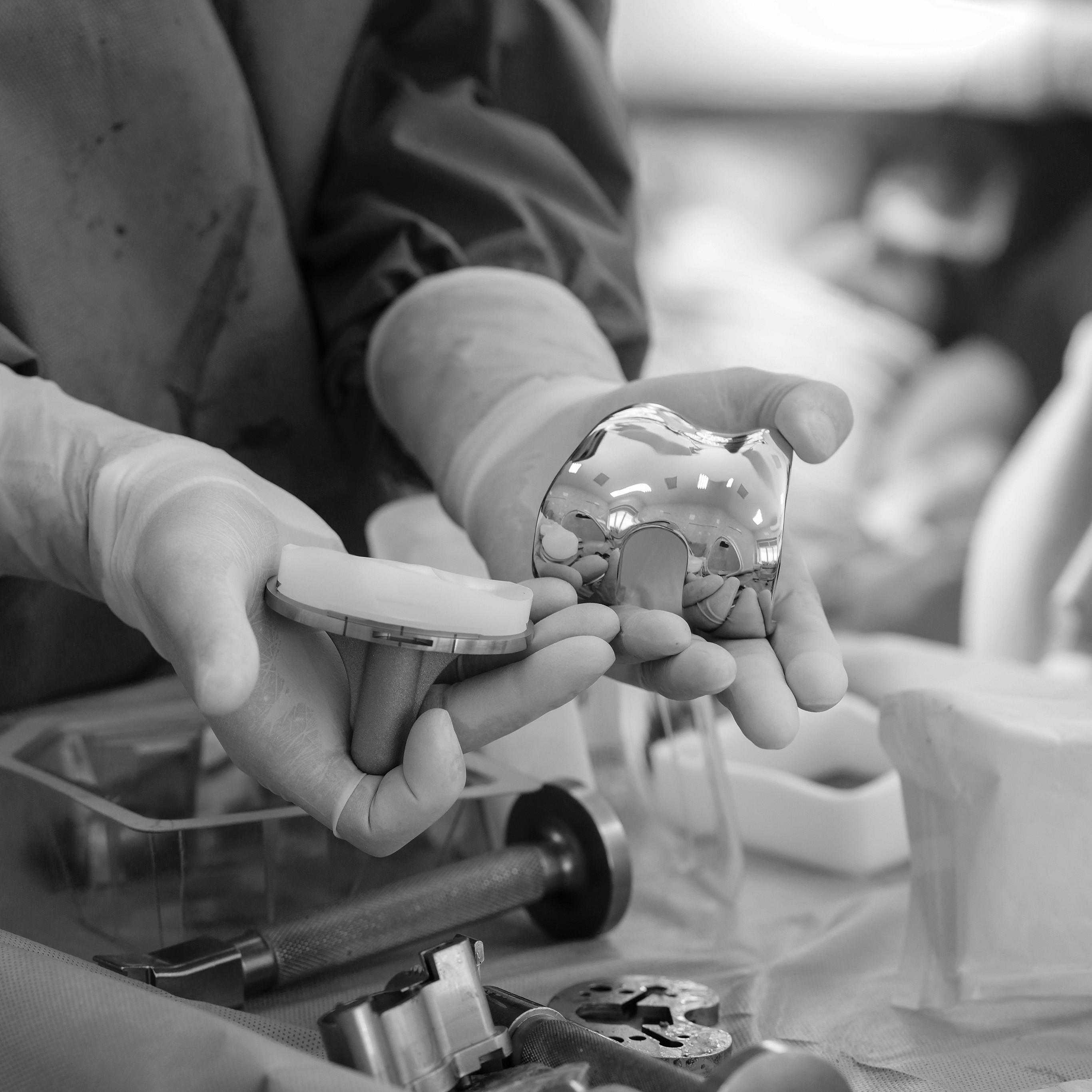
In orthopedic surgery, every tool swap means longer cuts, more bleeding, and a team left waiting.
Problem
No single tool on the market combines all four functions.
Surgeons alternate between instruments to suction, irrigate, retract tissue, and maintain visibility. Often in a cavity too small to accommodate more than one at a time. Ergonomics compound the issue — current tools force unnatural wrist angles, and prolonged use leads to real musculoskeletal strain over time.
Solution
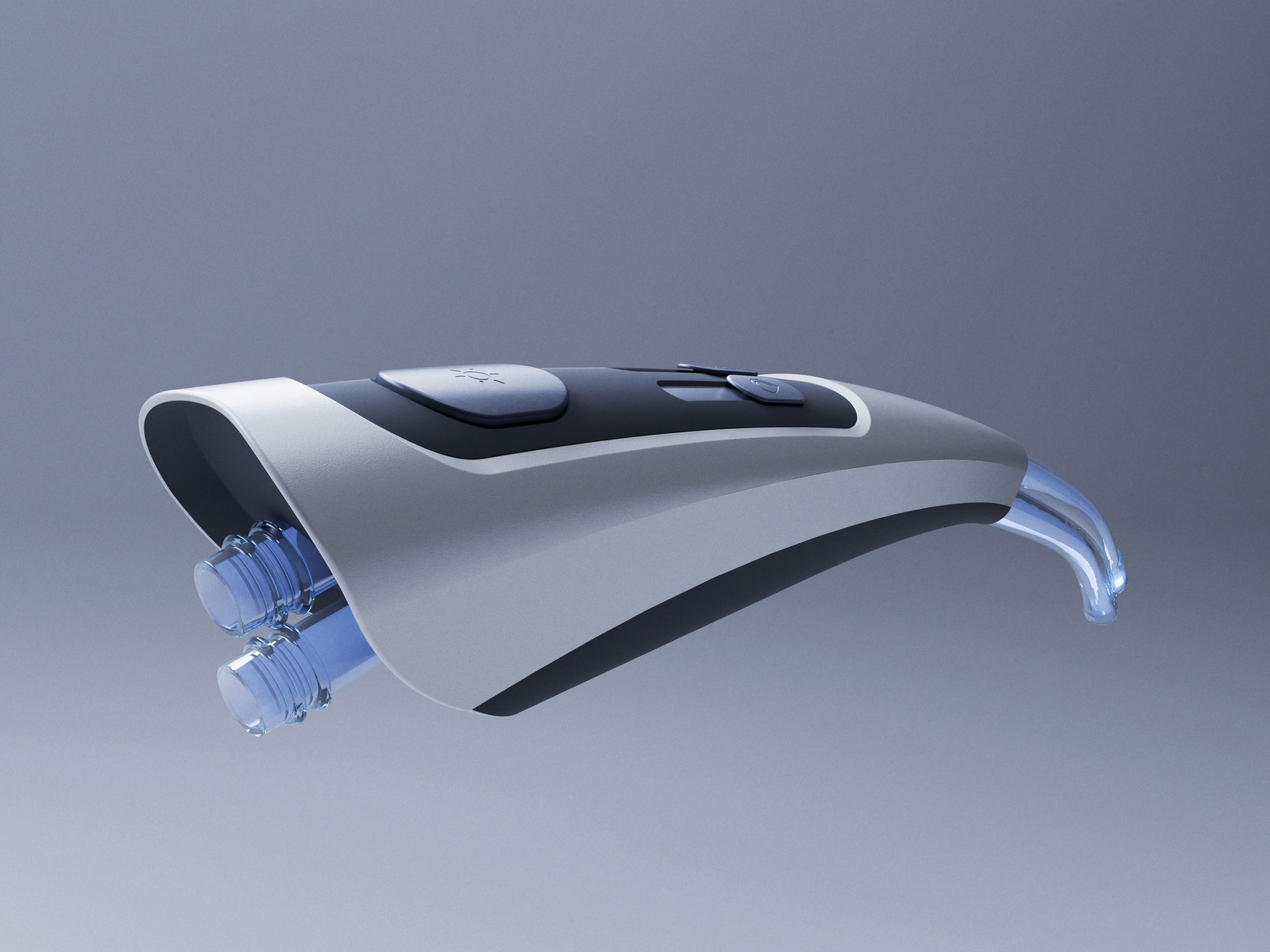
Lumiflex consolidates all four functions into one ergonomic handle.
No instrument exchanges, no secondary lighting setup. The surgeon holds one tool through the full procedure.
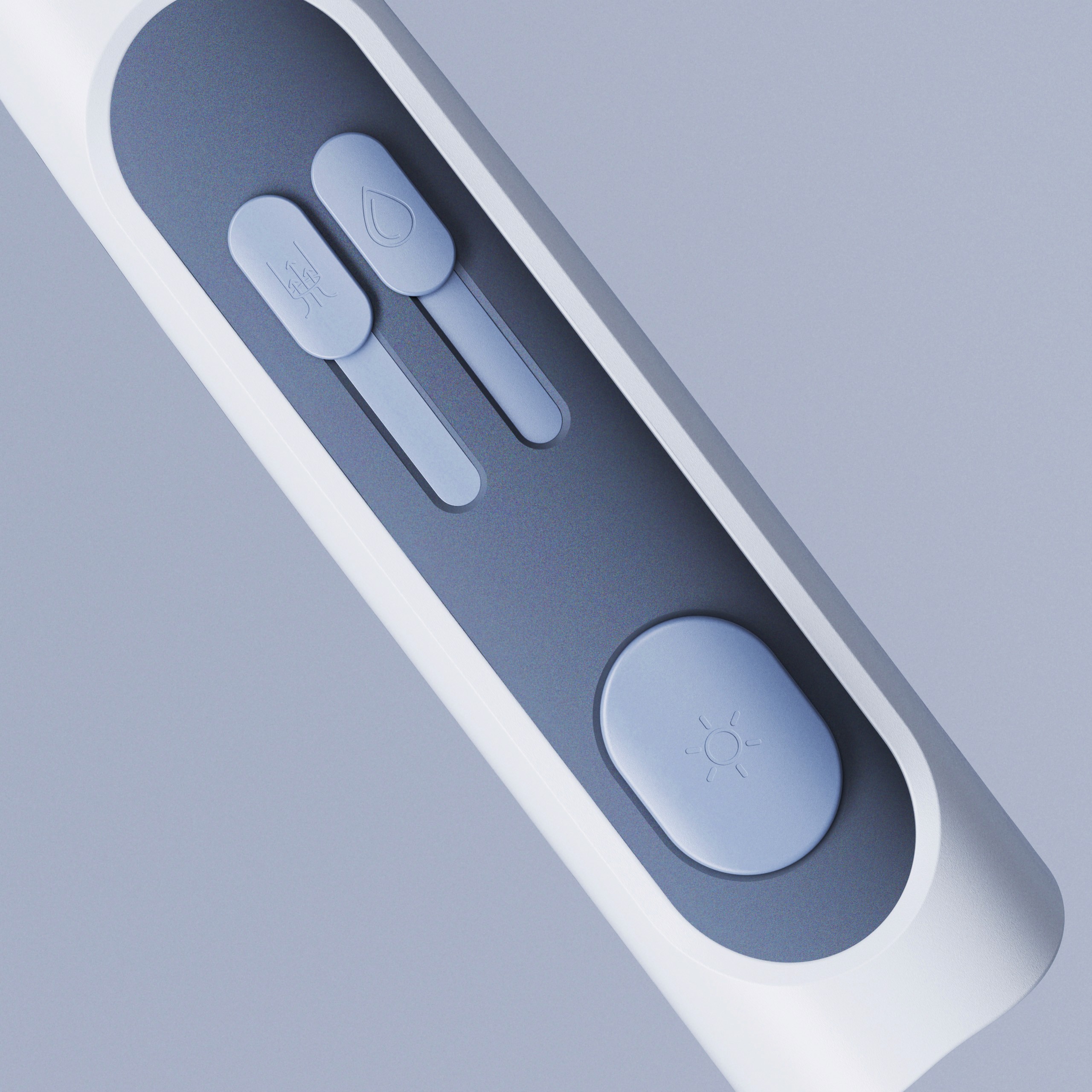
Features
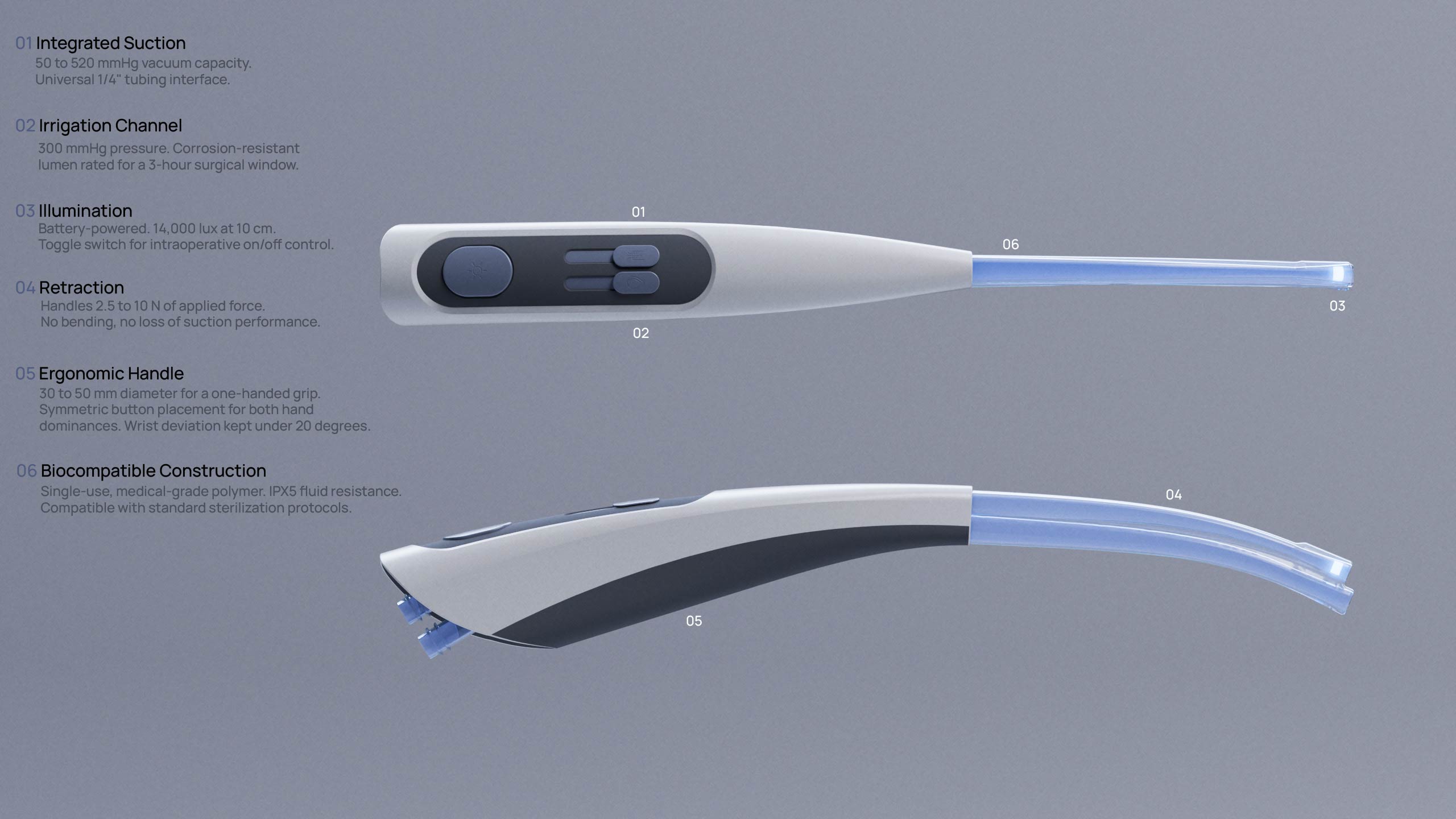
PROCESS
Ideation
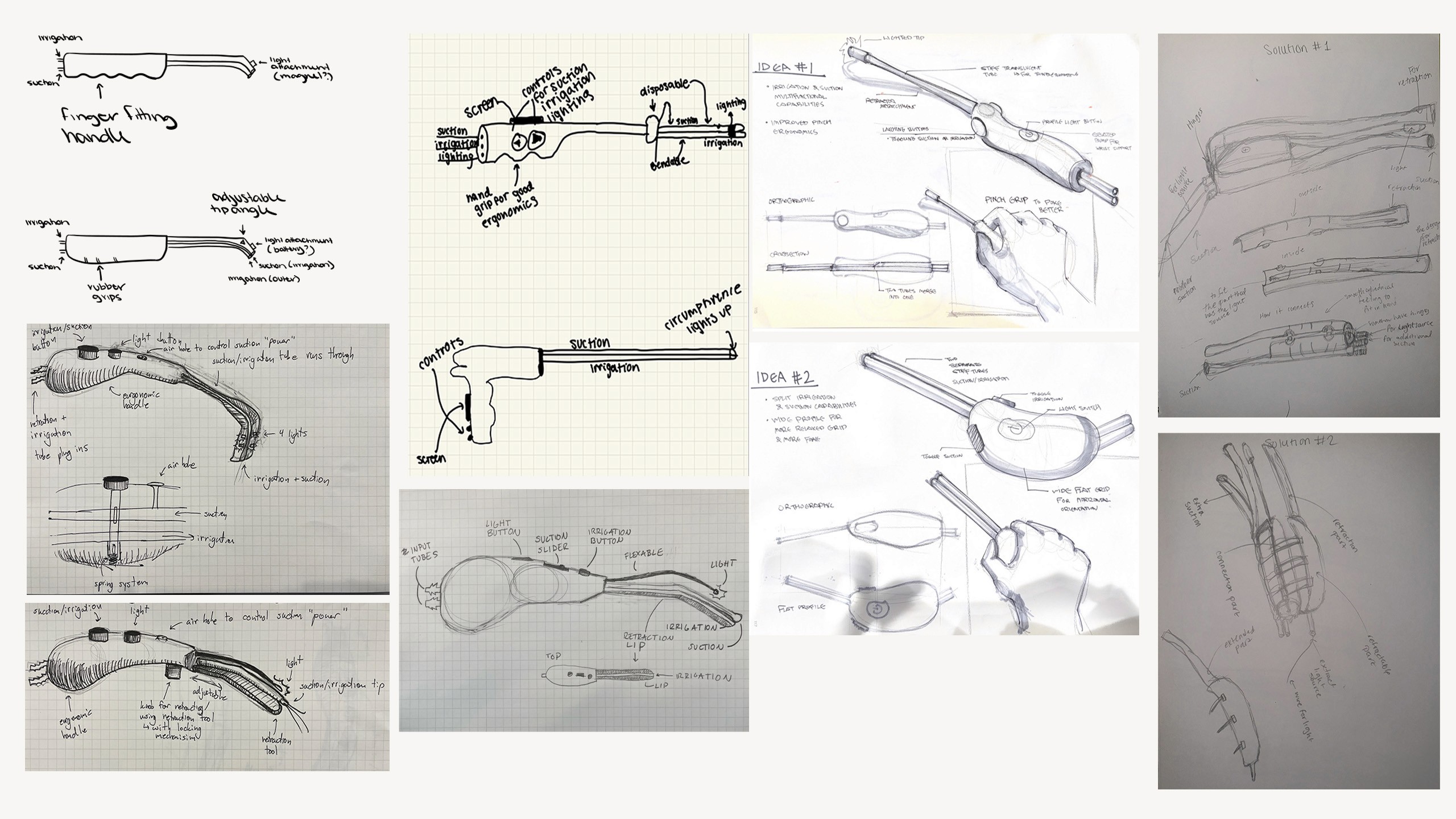
Sketch sessions run early in the process to resolve form and handle questions before moving to CAD.
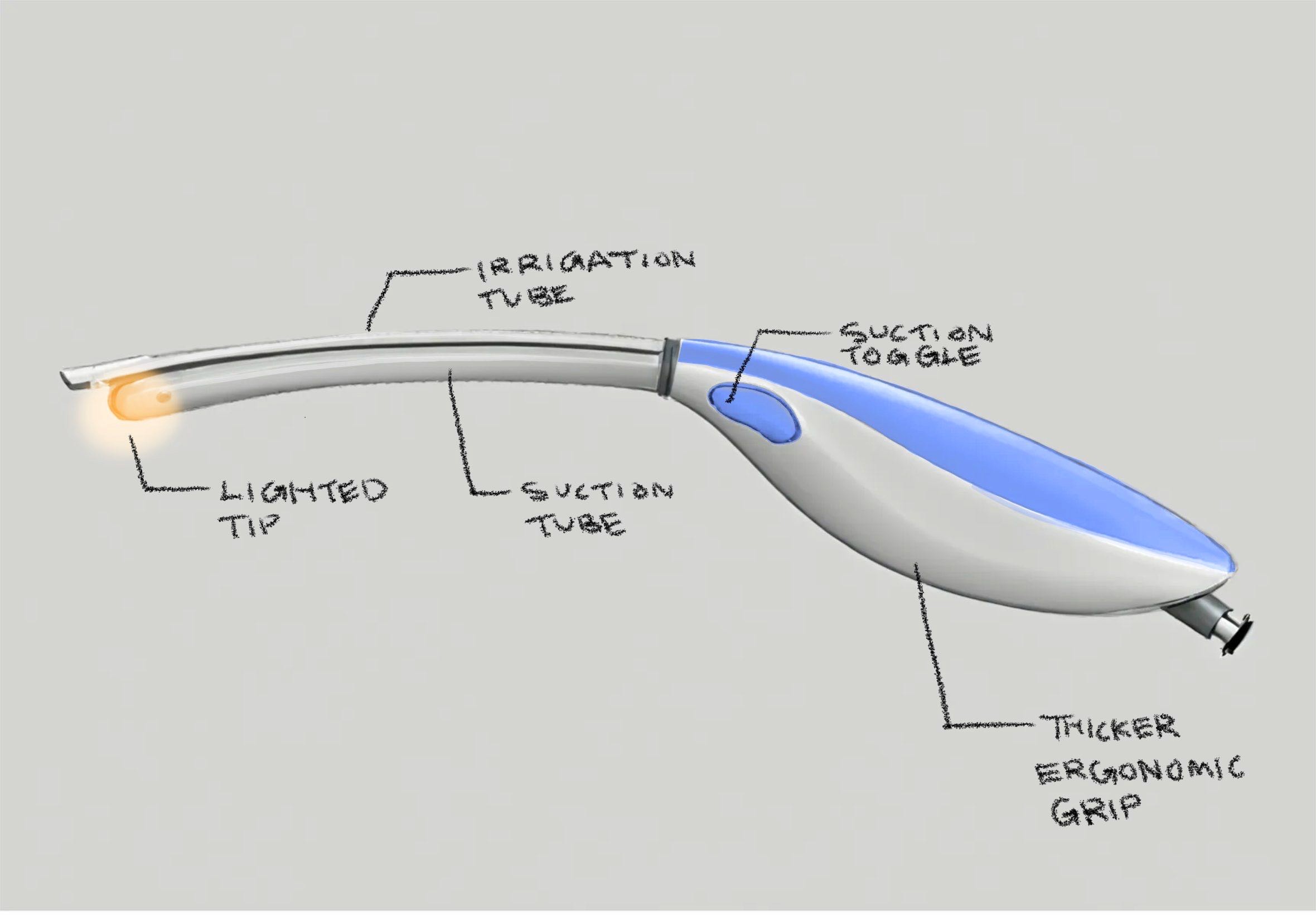
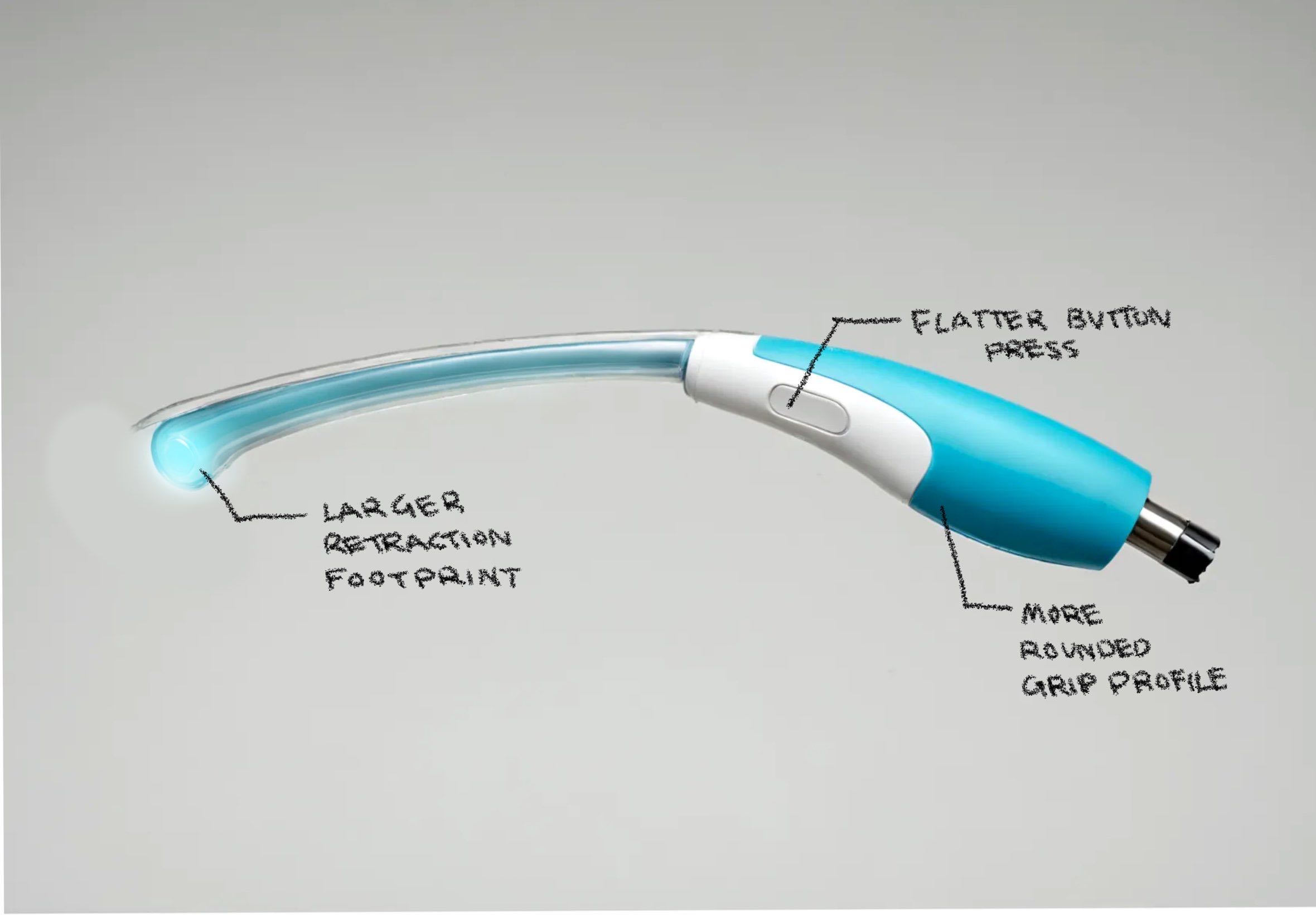
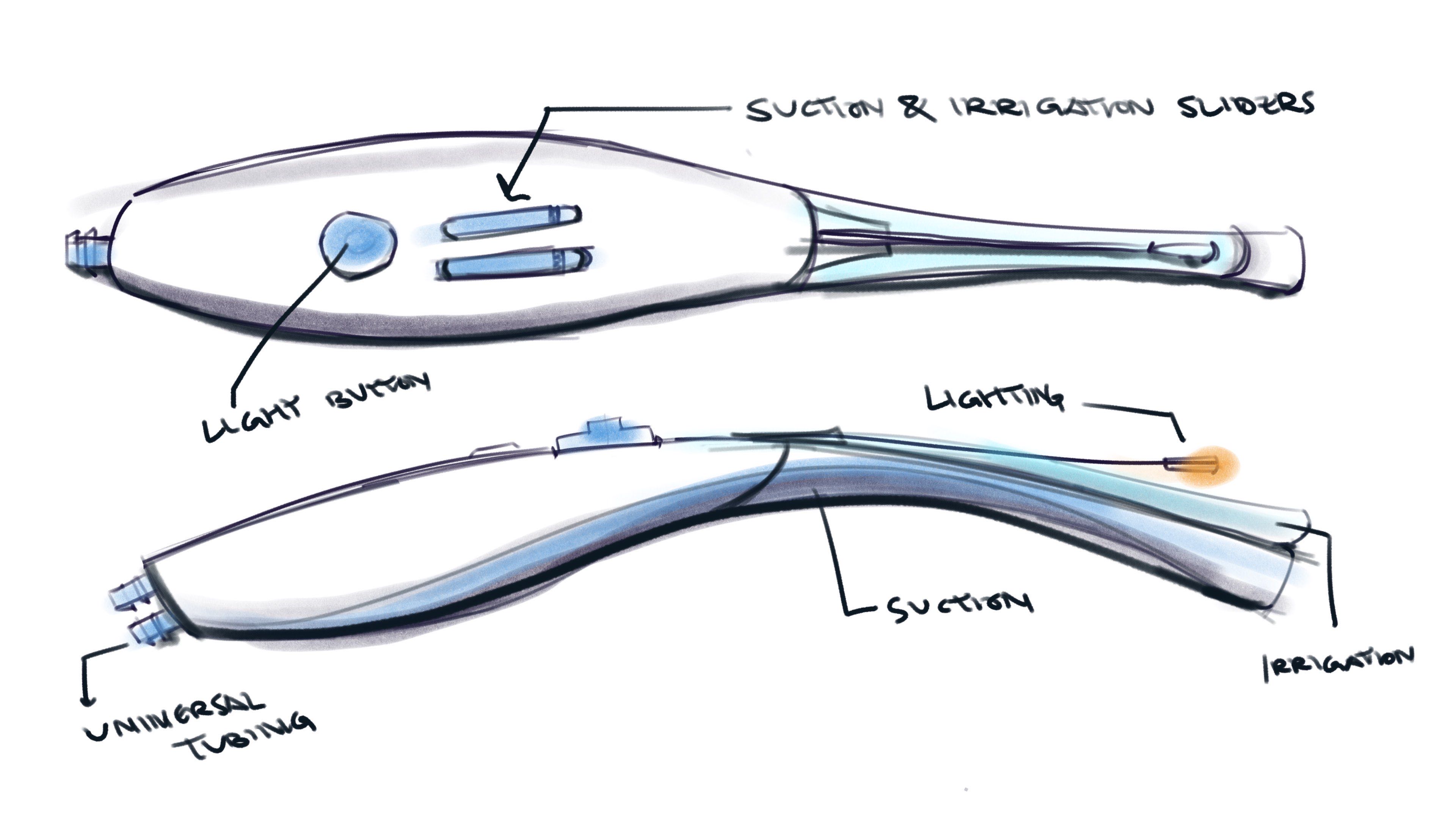
More refined renders helped lead the team to feature and layout clarity
Physical Prototyping
Testing covered each function independently before integration.
Suction performance was measured using pumps and IV bags across the 50 to 520 mmHg target range. For lighting, output was measured at 10 cm against the 14,000 lux benchmark. The three-point flex test confirmed structural performance under retraction loads.
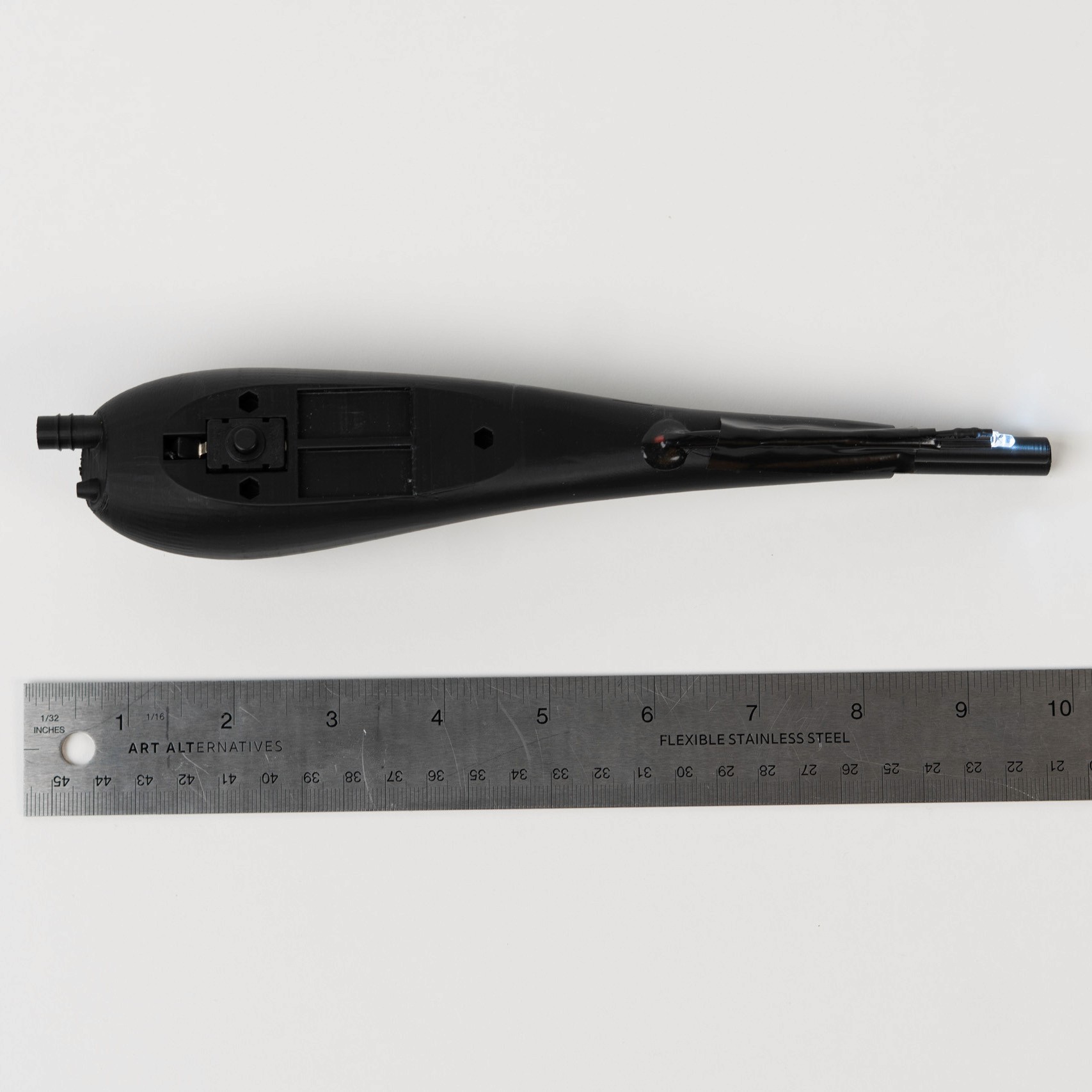
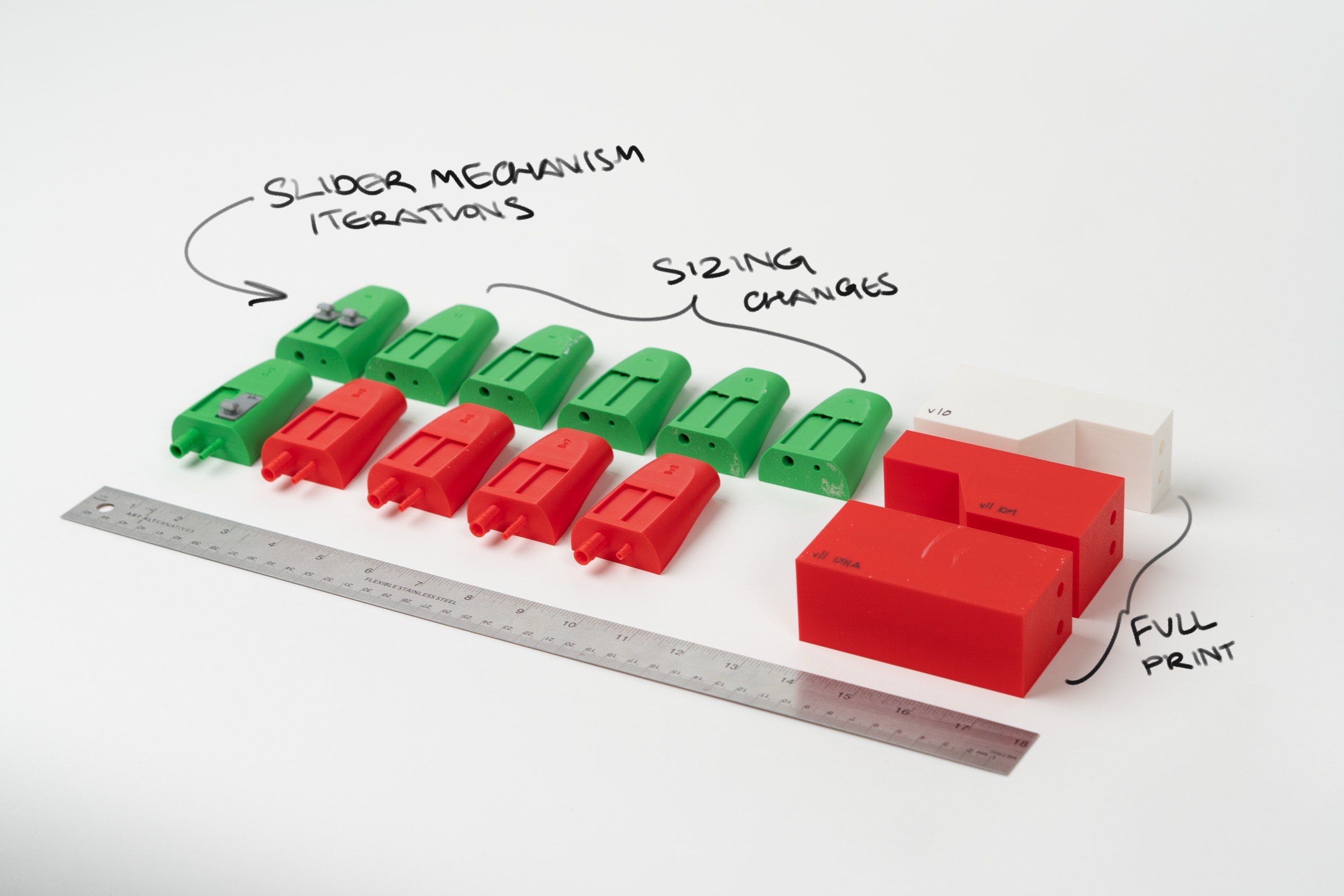
Sketch sessions run early in the process to resolve form and handle questions before moving to CAD.
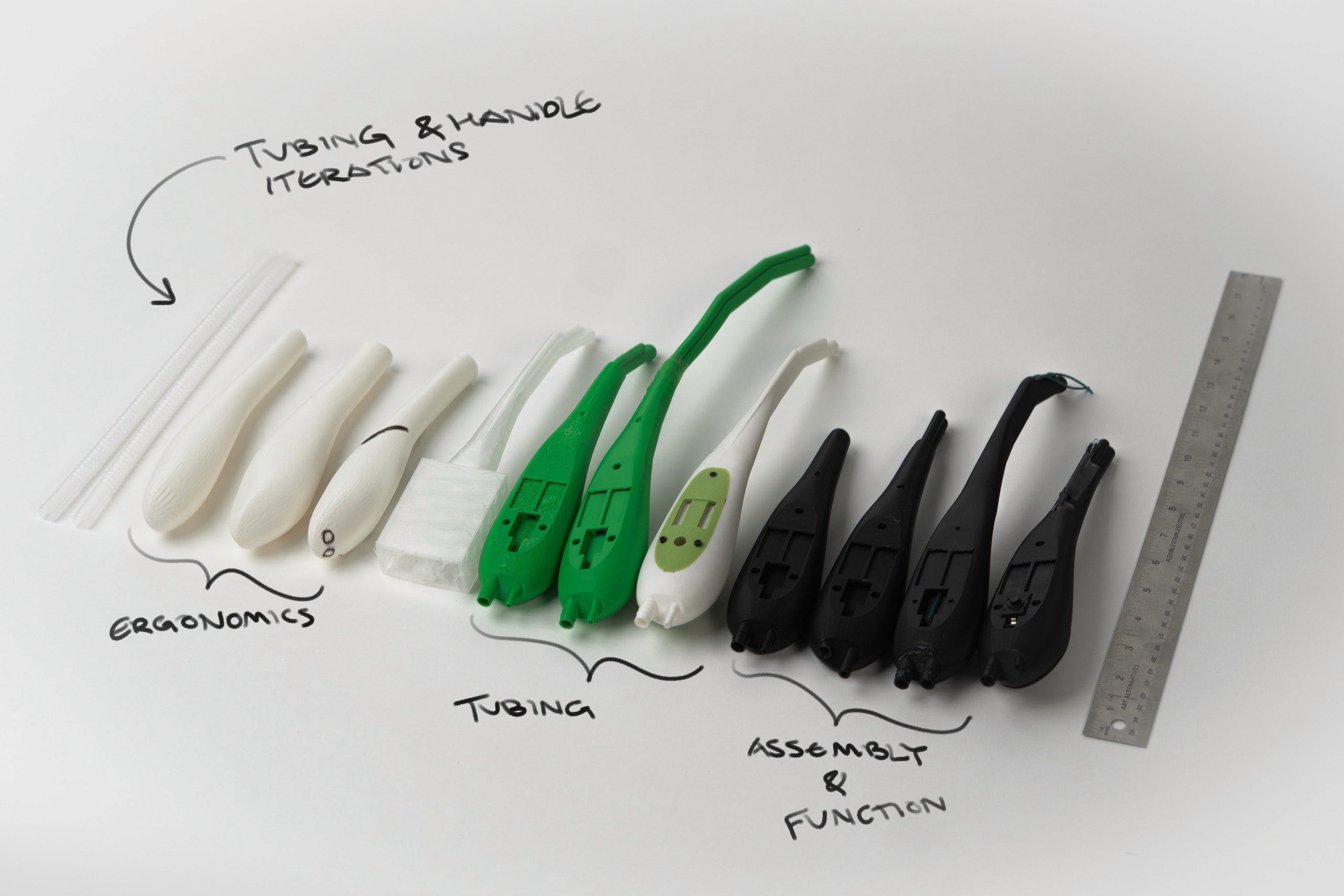
Sketch sessions run early in the process to resolve form and handle questions before moving to CAD.
Testing the prototypes (irrigation, lighting and force measurements)
Reflection
There was a gap between the design work and the physical testing.
01
Get closer to the testing.
I understood the validation requirements and knew the numbers. But being one step removed from the actual tests meant I was working with secondhand information. Earlier and more direct involvement would have made my revisions faster and more grounded.
02
Cross-disciplinary work takes deliberate communication.
Working on a team with a different primary discipline means your contribution isn't self-evident. Form thinking, design methodology, visual communication. Those aren't obvious inputs until you demonstrate them. I'd establish that earlier next time.
03
In-person observation changes what you ask for.
I reviewed surgical footage but didn't get into an operating room. That would have changed some of the questions I was asking about the form. Designing for a context you haven't experienced directly means you're always working with a gap.
Luke Shen / Carnegie Mellon University / Industrial Design