
Problem
Small appliances are the largest e-waste category (33% of total) yet have the second-lowest recycling rate at only 12%.
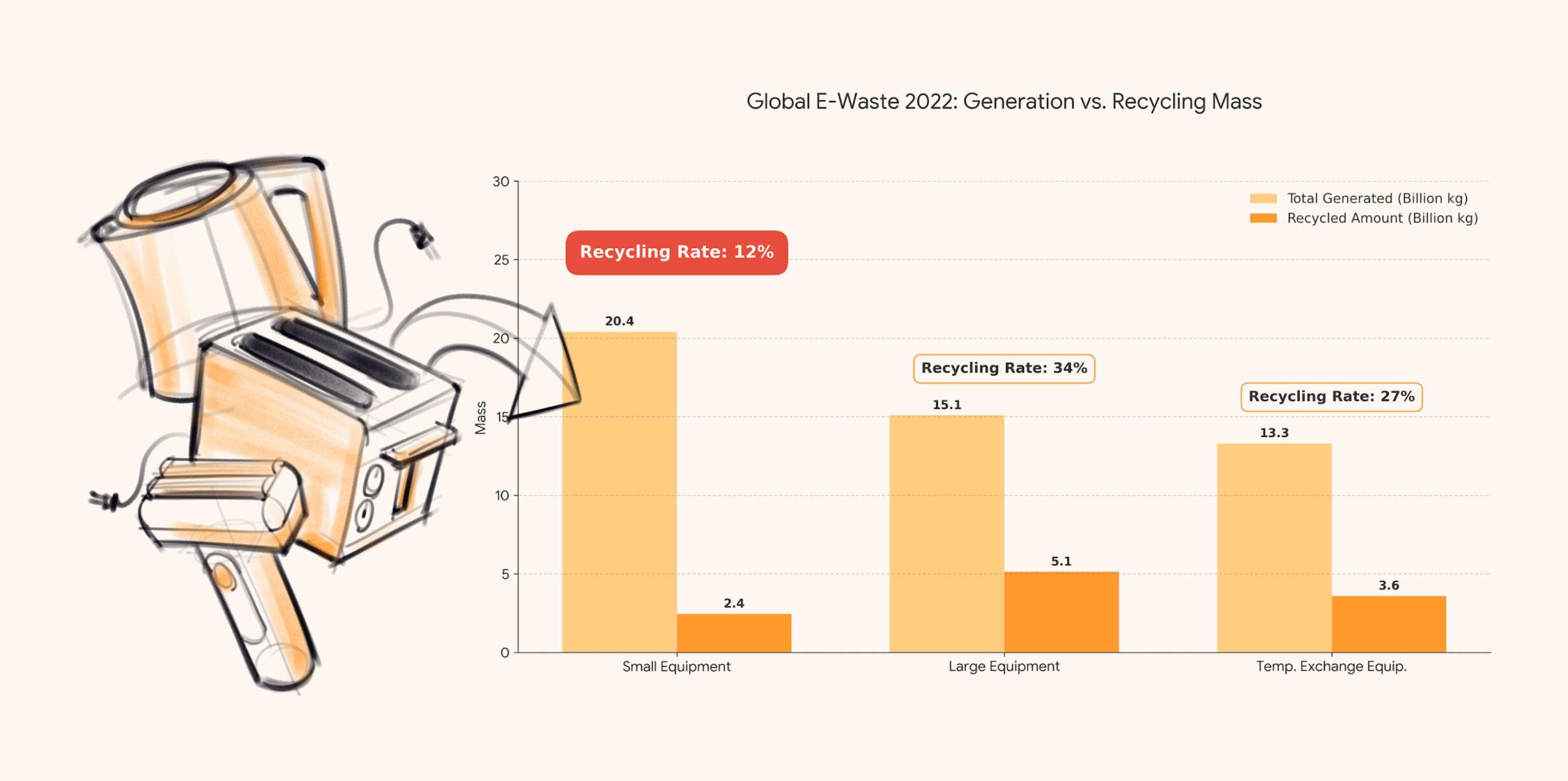
Small electrical appliances typically includes vacuum cleaners, microwave ovens,toasters, electric kettles, electric shavers, etc.
These products are mechanically simple enough to repair,
but they're assembled with permanent adhesives, single-use clips, and hidden components that make disassembly destructive or impossible.
When an appliance breaks, users face an impossible choice:
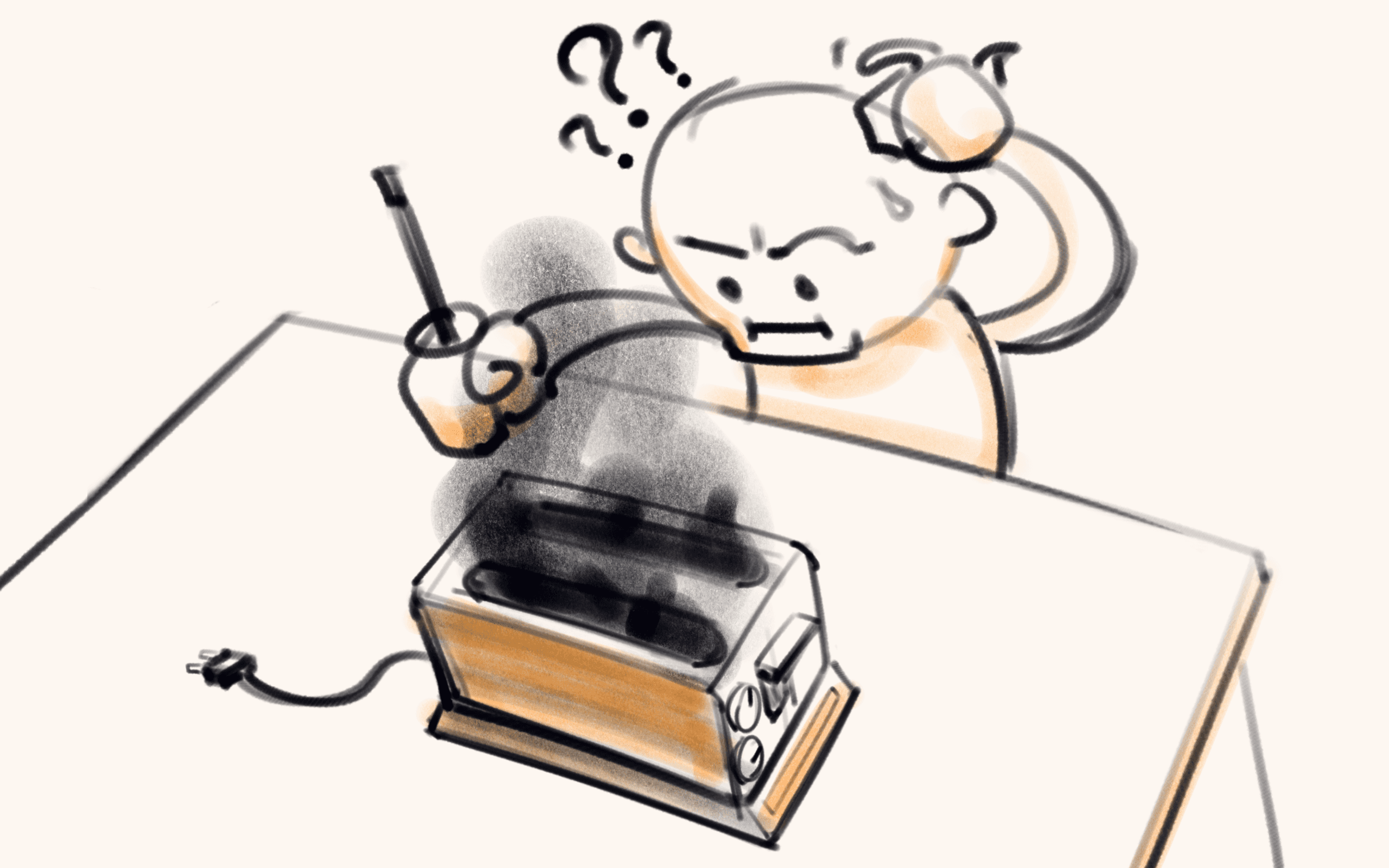
spend hours searching for obscure parts + risk breaking the exterior

or throw it away and contribute to landfills.
Most choose disposal—not from lack of care or capability, but because repair has been deliberately designed out of the product experience.
As everyday technologies grow more opaque, people are losing agency over the objects that shape their daily lives, while fixable appliances end up in landfills
Opportunity
The biggest e-waste problem presents the greatest repair opportunity.
Small appliances are mechanically straightforward and frequently used—ideal for transparent, repairable design.
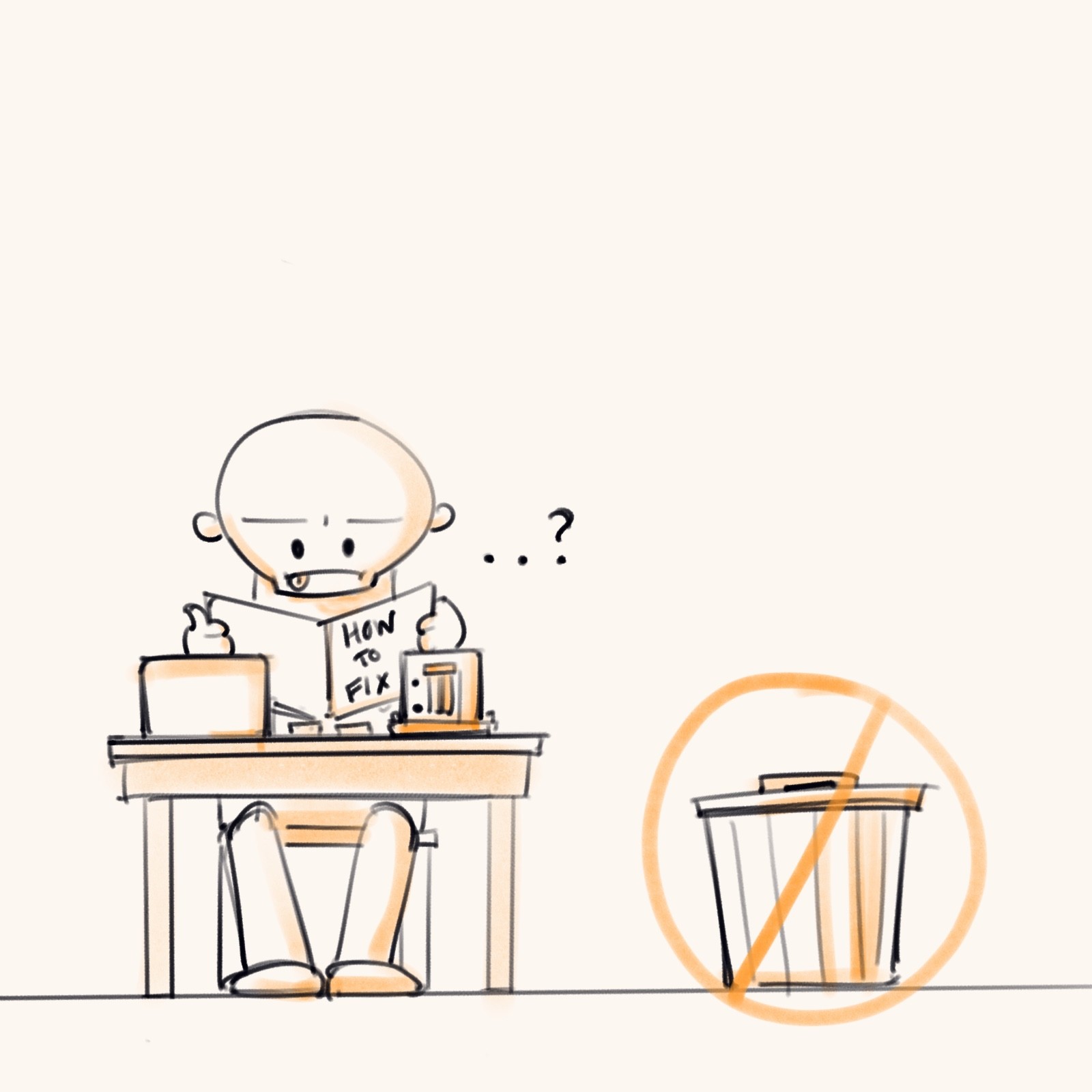
Repair directly addresses both environmental impact and user empowerment.
By extending product lifetimes, repair keeps materials in circulation longer while allowing users to maintain meaningful relationships with well-made objects.
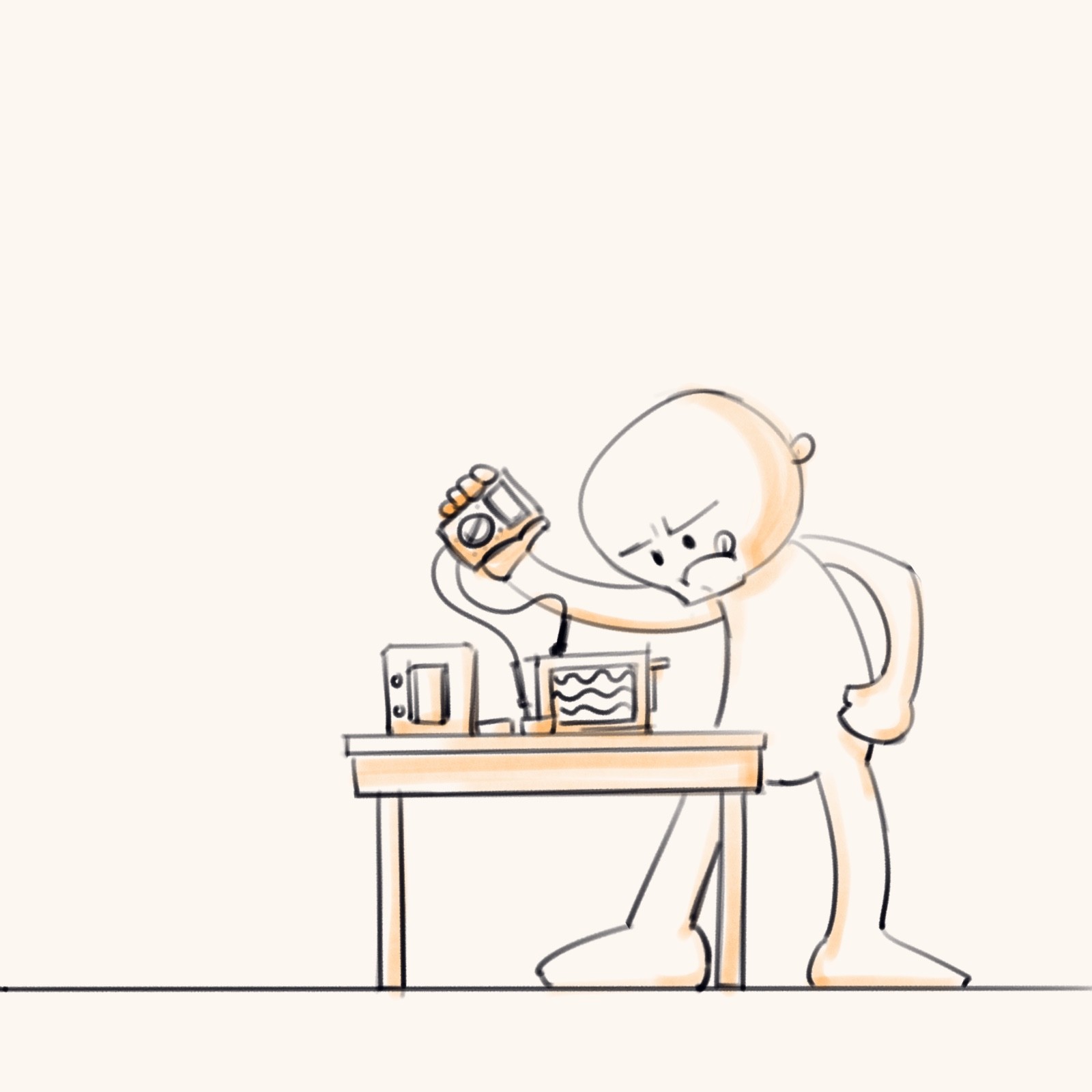
There's an untapped opportunity to redesign small electric appliances, not as sealed consumer goods, but as transparent, repairable systems that users can safely understand and maintain.
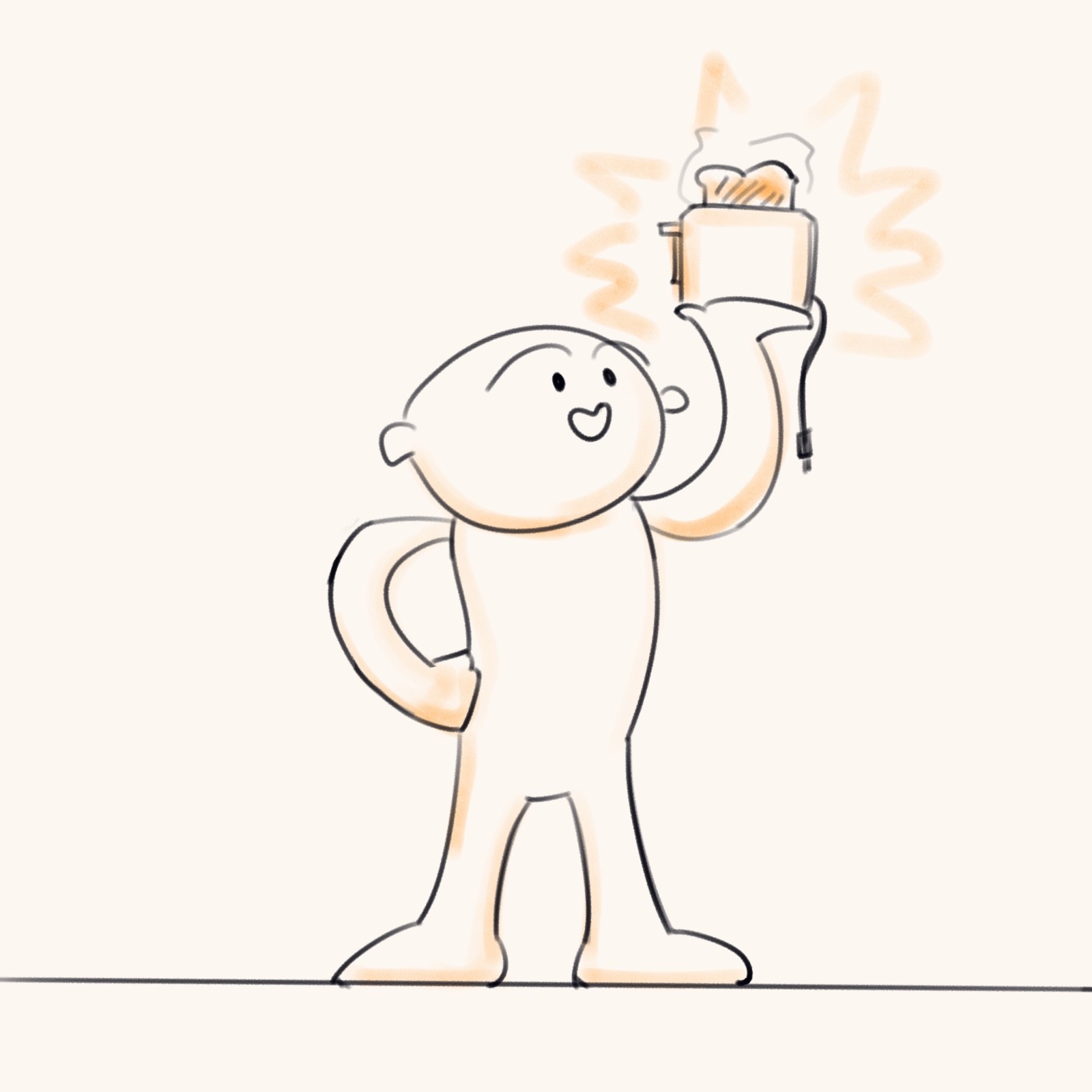
Repair can become an expected—even enjoyable—interaction, by pairing thoughtful product architecture with an inviting user experience.
Goal
Transform maintenance from failure into empowerment.
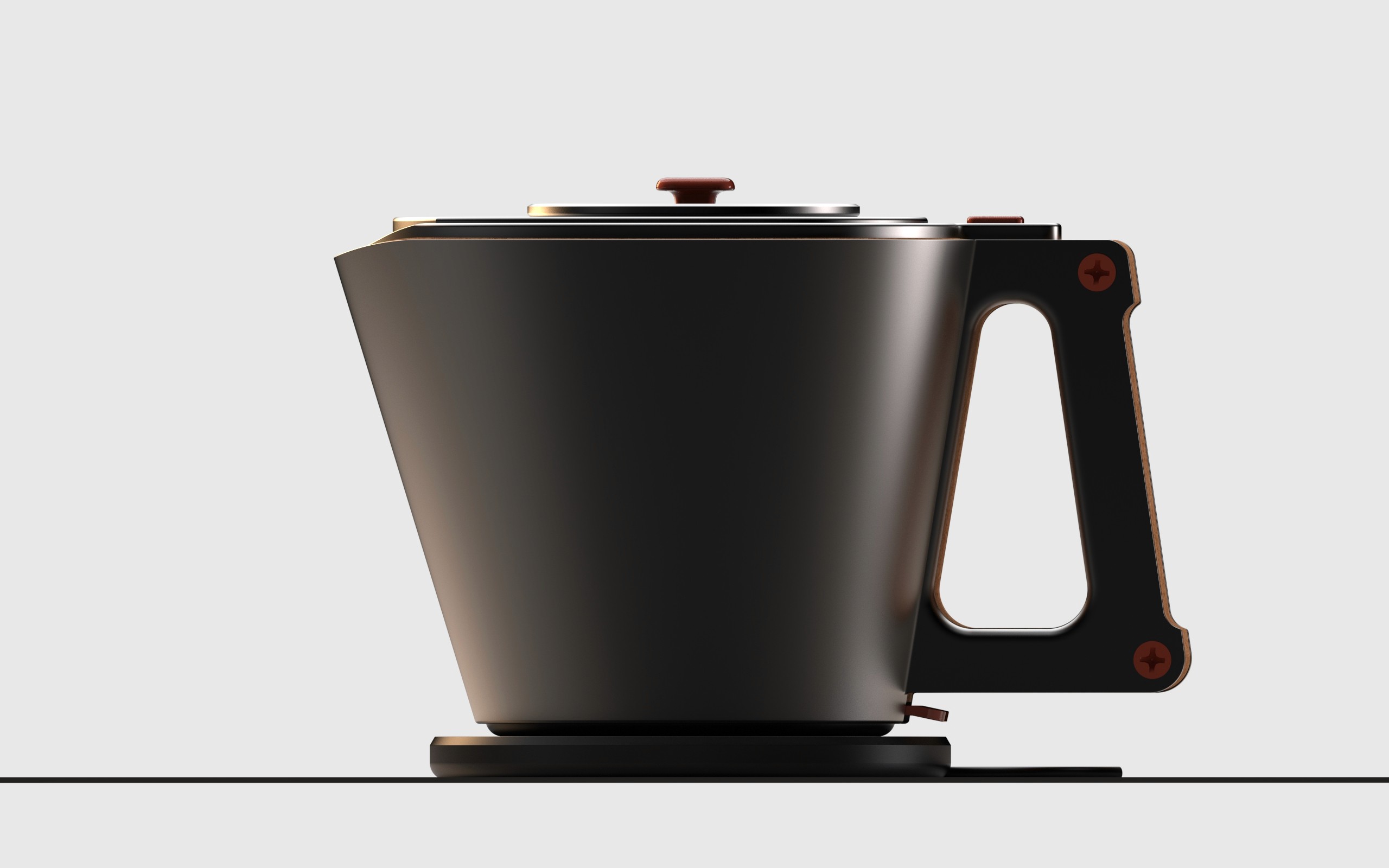
NENGXIU demonstrates how small appliances can foster care and responsibility—proving sustainability and user empowerment can be built into everyday objects.
Process
Initial Brainstorming: Diagnosing the Problem
My first instinct: people lacked repair information.
I imagined QR codes, diagnostics, detailed labeling, and modular heating elements.
User Research: Understanding the Repair Barrier
I surveyed Reddit repair communities and interviewed Pittsburgh Repair Café members
The critical insight: People weren't blocked by diagnosis—they were blocked by reassembly.
Single-use clips broke during disassembly. Adhesives prevented component removal. Most individuals were self-taught and motivated but products didn't let them succeed.
My focus shifted: Make opening and closing reversible and intuitive.
Refocusing the Approach:
Solve physical architecture first.
Modular elements required engineering expertise beyond scope. Destructive disassembly could be addressed through industrial design.
New Design Priorities
The concept evolved: From an educational repair tool requiring external support, to an object that makes repair feel natural through its own physical design.
Two clear systems:
Direct sightlines to heating element and switch
Color-coded fasteners and interaction points:
Reversible assembly:
Geometric features and visual logic show how parts connect, making reassembly intuitive
Market Positioning

The gap: No kettle prioritized repairability and lifecycle sustainability.
Target: Design-conscious young adults (26-30) valuing sustainability who need aesthetic appeal, not compromise.
Functional Simplification
I focused on just two systems:
Nichrome resistor with bimetallic auto-shutoff
Temperature-sensitive on/off switch
Both would be immediately accessible when opened—no hunting, no guesswork. Fewer features meant fewer failure points and easier diagnosis.
Material Commitment
Early commitment: single-material construction wherever possible to simplify end-of-life recycling.
Final palette:
Stainless steel (infinitely recyclable)
Cork (renewable, compostable)
Minimal plastic only where functionally necessary
When the kettle reaches end-of-life, materials separate cleanly without contamination.
Exploration
I moodboarded and sketched broad ranges—utilitarian vs. ceremonial, geometric vs. organic.
Drew from antique kettles, contemporary design, industrial objects.
Physical Prototyping
Prototyping focused on one question: Does this feel like something you're invited to take apart?
Iteration 1: Form in Space
3D-printed models verified components could separate, but users struggled to line up parts—no visual cues indicated how pieces connected.
Iteration 2: Obvious Cutouts
Added clear geometric cutouts so parts could only fit one way. But the small scale made people too careful.
Iteration 3: Harmonized Form & Full Scale
Lathed foam at 1:1 scale to test proportion, then laser-cut plywood for ergonomic refinement.
A complete 3D-printed PLA model at final scale with all disassembly interactions functioning, allowing me to verify the full user experience from opening to component access to reassembly.
Final Product
Core Philosophy: The form is simple. The materials are honest. The message is clear: this is yours to maintain.
Visual Invitation to Interact
Orange accents mark every touchpoint: screws, base, switch. Assembled: clean geometry. Opened: obvious path forward.
Orange = "you can touch this." It's an invitation,guiding users to every access point without text or symbols.
Accessible Interior Architecture
Long-term Relationship
Demonstrates everyday objects can foster care and responsibility—sustainability means creating products worthy of keeping.
Final prototype:
Opening reveals both systems immediately: heating element and switch. Direct sightlines to potential failures.
Material Honesty
Stainless steel body (recyclable), cork handle (compostable), minimal plastic where necessary.
Unlike sealed appliances, NENGXIU grows familiar over time. Each repair deepens understanding and reinforces ownership value.
Addressing the Sustainability Hierarchy
NENGXIU addresses all three priorities of sustainable product design:
Keep products longer: Quality materials and timeless design encourage long-term ownership rather than replacement
Enable repair: Reversible assembly, standard fasteners, and accessible components make maintenance achievable for users
Simplify recycling: Single-material construction (steel, cork) separates cleanly at end-of-life without contamination
Disassembly Research: Identifying Failure Points
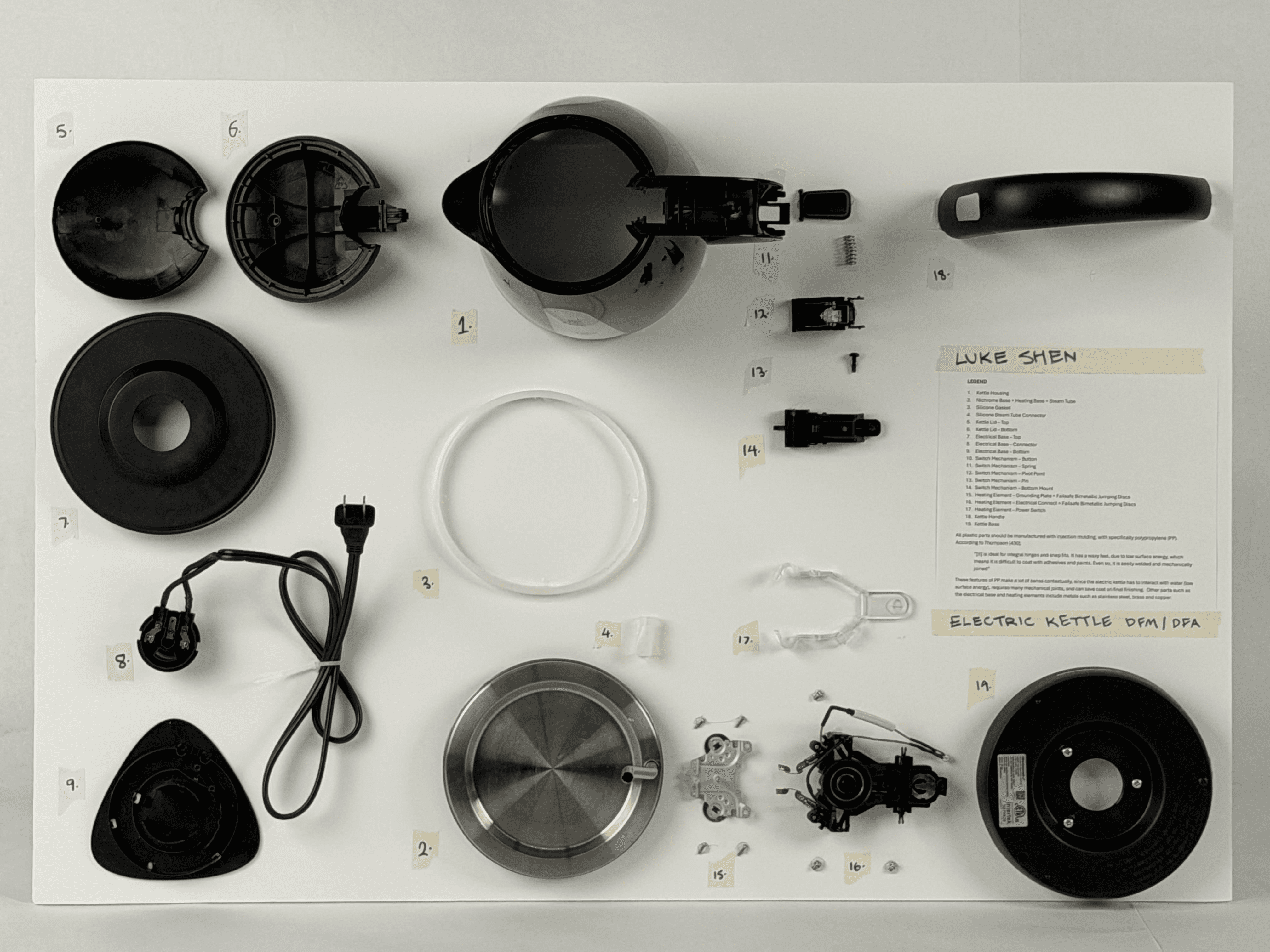
I disassembled a bare-bones electric kettle to understand construction and common failures.
Discoveries:
Nichrome heating element (most common failure point) was permanently embedded, requiring a mallet to remove
Assembly was intentionally irreversible through molded-in joinery.